Showing posts with label public transport. Show all posts

Thursday, January 17, 2013

Congestion charge case

No comments:
Bristol’s horrendous traffic continues to lower our health, wellbeing and quality of life. This will continue to damage present and future generations if we don’t do something soon that is effective. I’m therefore glad that Bristol's Mayor George Ferguson has not ruled out introducing a congestion charge for the city (see here and here).

Bristol’s transport problems are serious: every day too many vehicles are trying to use local roads; there are very limited possibilities for building more roads and in any case more roads bring more traffic and more damage; drivers spend half their time crawling in jammed traffic; congestion is costing business very large amounts of money; traffic congestion generates more air pollution and produces more climate change causing carbon emissions; congestion causes frustration and raises stress levels.

A congestion charge would ideally try to achieve: significantly reduced traffic in the most congested areas; similarly reduced delays; shorter journey times; reliable delivery times; the saving of many hours of journey time; the raising of large sums of money for re-investment in transport, especially public transport; switching to sustainable transport modes; a boost for public transport use; a system that pays for itself over time.

Lessons from London’s congestion charge should encourage us. Boris would have got rid of it altogether if it did not have merit. Congestion and traffic levels there would be worse without it. Numbers of cars and car movements would be even higher. Movements of buses, coaches and taxis would be more resticted. Tens of thousands fewer bus passengers would not enter the charge zone during the morning peak. Bus reliability and journey times would be worse and the time passengers wait at bus stops would be longer. Disruption on bus routes due to traffic would be worse.

We clearly have a serious problem in Bristol. We need to both provide a disincentive to car use and raise money to improve the public transport and other alternatives. If the details of any congestion charge scheme for Bristol are right, the decision making processes are fair and we can implement the scheme properly then I'm strongly in favour.

Wednesday, September 19, 2012

Fair fares

1 comment:
The Post reports that, 'A Mayoral candidate has promised to introduce £1 and £1.50 bus fares in Bristol if he is allowed to take control of the city's bus services. Liberal Democrat Jon Rogers, a cabinet councillor who used to be in charge of the city's transport department, wants to see a "Transport Bristol" authority set up to run them – in the same way as London.'. If this is a good idea now then why was implementation not started a few years back??? Jon Rogers and his Lib Dems have been and are running the city! Yes to lower bus fares and yes to a transport authority for Bristol but yes also to judging politicians by actions and outcomes and not just words.  

Wednesday, September 12, 2012

Tackling transport

No comments:
Seven of the candidates to become Bristol's elected mayor have raised doubts over the controversial bendy bus scheme. Three of the candidates at a hustings meeting in Broadmead last night even said they did not support the £50 million route into the city centre from the Long Ashton park and ride site at all (full story and online comments here). Bus Rapid Transit (BRT), especially BRT2 and bendy bus use is highly flawed, badly designed, not cost-effective, and will impact on the city, the environment, and local people negatively. Bendy bus technology has potential problems with: insufficient effective motive power; slower speed and acceleration due to the extra weight; overheating leading to stalling, or even a fire if diesel fuelled; in crowded areas with narrow streets and tight turns the accident rate may exceed than conventional buses. Bendy buses are supposed to be highly fuel efficient but this must be dependent on the city and the system they are running on and so in practice I have doubts that they will be more efficient in operation than double deckers here in Bristol. Good to see the stance in clear opposition to BRT taken by several mayoral candidates. George Ferguson has given me more reasons to give him my second preference vote, with Daniella Radice getting my first preference vote.

Friday, July 06, 2012

City Deal

No comments:
The £100-million Bristol Metro train network which will bring massive improvements to local railways is to go ahead with the first services running by 2016. It comes as a result of the City Deal agreed between local council and the Government which was announced yesterday...(more here).

Business rates to be kept in Bristol and used to raise more money for investment is very welcome. Plans to improve the local rail network are also welcome. Lets hope what is planned is effective and efficient. I do think there is a democratic deficit in all this thinking though and would like to see much greater and inbuilt opportunities for public participation, creating better openness and accountability - it wont be sufficient to simply lobby our authorities to use this money in the best way.

Details of the 'City Deal' for Bristol, according to The Post, are:

* A new growth incentive and the economic investment fund, which will allow West of England to keep 100 per cent of growth in business rates over 25 years to invest in projects, allowing authorities to deliver an investment programme worth £1 billion over 30 years.

*  Ten years of major funding allocation for the Greater Bristol Metro; flexible delivery for the Bus Rapid Transit Network which will allow savings to be recycled locally; and new powers over rail planning and delivery.

*— A Public Property Board will manage up to £1 billion of city council assets and an estimated 180 land and property assets to unlock more land for economic growth or housing and to lever in additional investment.

* A city growth hub with up to £2.25 million of government funding which will provide additional support to inward investors. This will be based in the Temple Quarter Enterprise Zone and will work closely with UK Trade and Investment.

* The business community and local enterprise partnership will have more influence in skills provision in the city region, in particular the £114 million Skills Funding Agency funding for Further Education colleges for post-16 provision, to help capture employer demand.

Saturday, June 23, 2012

Tackling transport

No comments:
Copy of my comment on this story, trying to bring Bristol City Council Cabinet Member and Cllr Gary Hopkins (pictured) back reality through proper transport performance indicators for our city:

@ gary_hopkins - can I remind you that we need to see positive transport outcomes in Bristol eg traffic reduction, significantly lower congestion and delay, much lower air pollution, carbon emissions falling in line with what best science says is needed and in line with the Climate Change Act...We simply aren't seeing significant improvements in the major performance indicators. I also remind you that part of the current transport plans includes building new roads - hardly likely to produce the transport outcomes I've indicated. If you have solid evidence to the contrary then I'd like to hear it.

Cllr Hopkins reply simply made no comments at all about traffic reduction - and no comments at all about carbon emissions. On congestion he said, rather lamely, ‘...conjestion [his spelling] and delays are down but not by as much as they should be because the dividends of these are for the time being being swallowed by First instead of being passed on to customers.’ This appears not to be about overall congestion and delays but in any case admits there is no significant reduction.
On air pollution he admits there is still a problem but that the European green capital assessment rates Bristol as best (!!!). In his words, ‘Air pollution is still a problem but it was interesting that the technical assesment for European green capital rated us best of any entrant on that area. The BRT will run on non fossil fuel and will make a significant contribution.’
Green capital assessment rates Bristol’s air pollution as best! This only goes to show how low their standards are. No evidence in his comment to back the claim that BRT will make a 'significant contribution'. It’s mere assertion therefore.

Cllr Hopkin’s denied it was mere assertion and gave some additional waffle and opinion but did not actually give any data or reference to data to back his assertions. It’s note-able that he simply did not comment at all on traffic reduction and on carbon emissions from transport which I specified along with air pollution and congestion as performance indicators. What forecasting/modelling has been done that shows that current transport plans will produce significant reductions in these? Does Cllr Hopkins have this data??
What Cllr Hopkins seems unwilling to recognise and acknowledge is that key transport outcomes such as overall traffic flow, air pollution, congestion and delay and carbon emissions are very unlikely to significantly improve under current transport plans such as GBBN and BRT with its associated road building. In fact some of them may well get worse. An RAC Foundation report in 2011 said there will be four million more cars will be on the roads in the next 25 years. It goes on to forecast a 43% rise in traffic volume by 2035. Department for Transport figures show that by 2035 traffic will rise by nearly 50% and delays more than 50%on average (more here). To make real and lasting improvements realities have first to be acknowledged.

Some useful information on transport in Bristol here.

Thursday, June 21, 2012

Decision before evidence?

No comments:
Bristol City Council rejected the chance to build a tram system despite figures showing it would be cheaper than the proposed new Bus Rapid Transit link, it has been claimed....Sustraco claimed that Mr Kent [Bristol City Council Cabinet Member for Transport, pictured left] announced at the end of the meeting that the council had already decided "before the meeting" that the bus option would be chosen. On returning from the meeting, Sustraco officials said they found they had been sent e-mails with a 34-page report attached. The report, which Sustraco said was written before the meeting, detailed the decision without considering evidence submitted in the meeting...(full story here)

Only one conclusion can be drawn from this, if what Sustraco say is true. Tim Kent and the Lib Dem Cabinet running Bristol made a decision involving many millions of pounds without considering the all the evidence. Kent met with Sustraco knowing that holding the meeting was pointless given that decisions had already been made! Unless Sustraco's description is shown to be wayward, this is irrational, unreasonable and deceptive behaviour whatever the merits or not of light rail vs BRT.

Friday, June 15, 2012

Bendy buses

No comments:
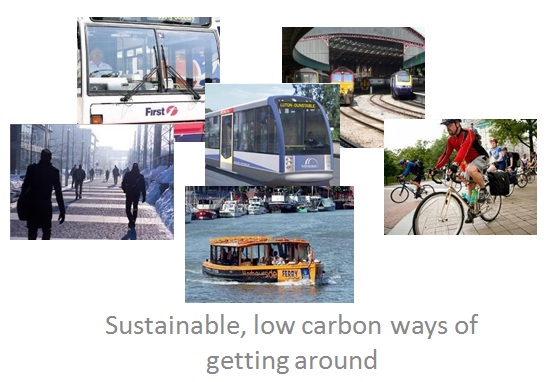
I'm an opponent of the current Bus Rapid Transit plans but as a keen advocate of communal, public transport I'd like to see investment in BOTH the Bristol bus and rail system (in addition to walking and cycling) and in combining all of these smoothly (see story and comments here).

Light rail is just about the most energy efficient form of motorised transport and it is likely to be more successful in getting car drivers to switch modes. However, it should not be a matter of rail vs bus, though I acknowledge that there is only so much money being made available.

FOSBR are right to oppose BRT, not least because of unsuitable routes and new roads,  but I'm not so sure about all their reasoning. The case I'd make against bendy buses is that they have potential problems with: insufficient effective motive power; slower speed and acceleration due to the extra weight; overheating leading to stalling, or even a fire if diesel fuelled; in crowded areas with narrow streets and tight turns the accident rate may exceed than conventional buses. Bendy buses are supposed to be highly fuel efficient but this must be dependent on the city and the system they are running on and so in practice I have doubts that they will be more efficient in operation than double deckers here in Bristol. Mind you some parts of FOSBRs rail alternative are non-starters - a tunnel under St Mary Redcliffe is both impractical and likely to be far too costly.

There is a problem with money availability if we are to invest in both buses and rail. Yet we need to invest several times what is available for BRT if we are to make a serious dent in Bristol’s traffic and traffic-related problems. It will be interesting to see how the Mayor elected in November approaches this. There is a problem with our congested roads because we need to make the existing bus system more effective and efficient and extensive, if we are genuinely trying to meet targets such as absolute traffic reduction and significant lowering of pollution - so are we willing to make a decent number of existing roads car and lorry free?? And would a Mayor be willing to bite this bullet?

More thoughts on sustainable transport here:

Tuesday, May 15, 2012

Stop BRT2

1 comment:
Passing on details of this site and campaign. I'm preparing some emails to send to the relevant cabinet members and councillors asking questions and opposing the scheme.

We want BRT2 stopped because
It will not achieve its primary goal of addressing Bristol's transport problems and needs.
It will not achieve its goal because it is a flawed plan, badly designed, too expensive, and will have adverse effects on the city, the environment, and local people.

STOP BRT2 | . . . there are better ways

Saturday, March 10, 2012

Parking proposal

No comments:
Plenty of whinges but not much in the way of constructive suggestions from commenters on this story 'Bristol businesses facing workplace parking levy'. Bristol's transport system has large and longstanding problems, such as from congestion and pollution. It costs city dwellers and workers a lot in money, health and environmental terms. What solutions do the whinging commenters propose?

For me the area shown in the map (above left) showing two possible boundaries for the workplace parking levy scheme is far too small and has many inconsistencies - and the city's proposals for 'sustainable' transport and 'green' taxes (if indeed they meet the proper definition of sustainable and green) are often too timid, unintegrated and lacking in coherence. A properly stategic approach is what is needed, so that all council policies pull in the same direction.

Wednesday, December 21, 2011

Sustainable suggestions

2 comments:
‘Creative’ and ‘exciting’ ideas sought for derelict depot land Bristol Temple Meads station. Er...its right next to Temple Meads so doesn't that strongly suggest a sustainable transport development of some kind and/or something that large numbers of people would need to get to...like an arena? Also next to a river with big water movements, which suggests a renewable energy facility...

Monday, December 19, 2011

Crystal ball forecasting

No comments:
60,000 new jobs from the new transport plans in and around Bristol?? Story here. This will sound like a gross exaggeration to many people. On what basis have they made this claim exactly? Crystal ball gazing? This is an argument technique many use to try to justify schemes, such as new roads, that many local people have concerns about. Chief executive of Bristol Airport and transport lead for the Local Enterprise Partnership Robert Sinclair say they believe this is the figure but of course they have an interest in talking up developments they favour - and the only people backing them up in the report are business and political figures who have the same interest, so they add no weight to the claim at all. So, all we are left with is a jobs figure a few say they believe in and no substance.

Thursday, December 15, 2011

Bristol: Carbon City

1 comment:
Really Cllr Kent is deluded - he blows his trumpet very loudly indeed when he says Bristol will get the transport system it deserves. Cllrs love it when they can announce they've got money for something almost no matter what it is. For a start building a new road will ultimately add to the congestion and pollution existing now at high levels - its already very costly to business in pounds and costly to people in health and the environment in lost quality and quantity. Bus Rapid Transit is often not the best technology - and persistently asking just a few questions at public meetings on BRT reveals environmental decision making 'systems' that are simply not joined up thinking. Whatever happened to building a low carbon city with a high quality of life for all, the aim of Bristol Green Capital?

See http://www.bristol247.com/2011/12/15/bristol-to-finally-get-transport-system-it-deserves-15367/

Tuesday, December 06, 2011

Five a day

No comments:
Very informative feature on the BBC website showing that on average from 1999 to 2010 five people were killed on the roads every day (see map of road deaths in the Bristol area for this period - click to enlarge). The time lapse maps are really striking.

Britain has one of the best records in the world for road casualties. However, hundreds [more like thousands] still die on the roads every year. In 2010, the police recorded 1,850 deaths, 22,660 people seriously injured and 184,138 who received light injuries.

About this data:

Using official data recorded by police in Great Britain between 1999 and 2010, we have plotted every road collision in which someone died. In all, 36,371 fatalities are marked on this interactive map [click link to BBC site bottom of this post]. You will also find partial data for Northern Ireland, for 2004-2009.

Detailed information about each crash is recorded by the police at the scene. It is subsequently transferred onto a computer database. This is available to researchers from the
Economic and Social Data Service. As with any large collection of data, there will be errors and omissions that occur in this process and some of these will be found in this map. The BBC apologises for any distress or offence that may be caused by the inclusion of these errors.

If you find any errors, please use the feedback form below and let us know. We will endeavour to correct them where possible.


Feedback: Road casualties feature

Answers to some of your frequently asked questions are here.

BBC News - Every death on every road in Great Britain 1999-2010

Monday, August 22, 2011

Opposing the 'South Bristol Link' (ring road)

No comments:
Passing on details of this group and campaign (campaign postcards are now available I think): For the past five years, Transport for Greater Bristol Alliance has opposed the West of England Partnership's proposal to build a new road through South Bristol and its greenbelt. A previous application to build a road by North Somerset was turned down by the Government in 2002 as 'poor value for money'. As originally proposed in 2006, the road was seen as completion of the Ring Road, a dual carriageway running between Long Ashton through South Bristol to link up with the existing Ring Road at Hicks Gate. The Council decided to drop Stage 3 (Hartcliffe to Hicks Gate) due to strong local opposition. The road was renamed the 'South Bristol Link' and a Bus Rapid Transit has been added. The SBL is now being sold as an essential part of a wider BRT network. We continue to oppose the current scheme.

On 9th Sept 2011, the Partnership (four local councils) is applying for funding to the Department for Transport (DfT) for this £45m scheme along with BRT2 (Long Ashton P and R to Cabot Circus) and BRT3 (Northern fringe to Hengrove). TfGB has produced postcards addressed to Norman Baker, Under-Secretary of State for Transport for members of the public to use to object to SBL (deadline 7th October). You can get
postcards and further information from pip_sheard@hotmail.co.uk. On the campaigns page is a four page briefing outlining details of the current scheme and why we believe the combined road and Bus Rapid Transit is poor public transport value for money and environmentally damaging and should be rejected by the DfT.

Transport for Greater Bristol

Monday, July 18, 2011

Talk, talk, talk on local rail and integrated transport

No comments:
This is spot on: ...GREATER Bristol is more interested in carrying out rail studies than actually reopening stations, according to a rail expert.

Former London Rail boss Ian Brown has published a study for the Railway Development Society, which looks at investment in local rail services.

The study shows that while 356 stations have re-opened across the country since 1960, in Bristol there has been just two in half a century.

Mr Brown concludes that "the Bristol region has not as yet shown any evidence of fulfilling the role of an effective 'client' for rail, although there has been considerable expenditure on seemingly endless 'studies' ".


Local rail campaigners point out that areas with one body to sort out transport – Integrated Transport Areas – have fared much better, and Mr Brown agrees.

That includes West Yorkshire with 22 re-opened stations, Merseyside with 16, and Greater Manchester with 15...


http://www.thisisbristol.co.uk/City-interested-studies-stations/story-12963382-detail/story.html

Thursday, June 30, 2011

Optimism on sorting Bristol's transport problems

No comments:
The Bristol Evening Post says 'Bristol's metro is not as far off track as you might think'. I hope they are right and can help build up momentum for change on this issue. As many of my blog posts show I'm in favour of a Greater Bristol Integrated Transport Authority that implements a sustainable transport plan. History points to lack of agreement and cooperation between the local authorities though. If agreement and cooperation is reached they still need to get the process of decision making right: exploring the situation; formulating problems, opportunities and systems of interest; identifying feasible and desirable changes; taking actions; and re-exploring etc as appropriate. They need to fully involve as wide a range of people as possible right from the start, ensure good quality, comprehensive information is widely disseminated, get genuine cross-party and cross-organisational cooperation, agree the right goals, get finances sorted, assess technologies fairly and broadly, find a combination of technical, behavioural and socio-economic change that will consistently take us in a firmly sustainable direction... Its nothing like as straightforward and obvious as this Post report - which has a strong technocratic, techno-optimist slant - suggests.

Wednesday, May 18, 2011

Lose a local election, continue to run the council

No comments:
Despite election losses the Lib Dems will continue to run Bristol (see link at end*). No surprise there, especially given the electoral arithmetic when we elect only a third of councillors at any one time. I doubt that any other party relishes taking on running the city in a time of cuts in any case (no doubt they are happy that their opponent will continue to take the blame).


I'm pleased to see the green spaces sell off halted subject to review, though I'm someone who opposes the principle of selling off green spaces whether the decision is taken by the council or more local Neighbourhood Partnerships. We need more not fewer green spaces for a wide variety of economic, health, social and environmental reasons.


I also welcome a prompt decision on the town green in Ashton Vale, though I have grave doubts about the basis on which some councillors will be deciding, given the fairly frequent and commonplace statements about wanting to see a football stadium on this greenbelt land. The matter will end up in the courts.


The new group set up to consider major transport issues like tram proposals, the bus rapid transit schemes and the Temple Meads transport interchange is a good idea. Should have been set up before now. I'm not yet clear on what its full role is and what power it will/can have to propose and enact changes though. This is a vital issue given the heavy traffic and poor public transport and integration is one key reason why Bristol is far from being a green city.


Tuesday, May 03, 2011

Voting Green: my ten reasons

No comments:
1. Voting in another Labour, Lib Dem or Conservative person means supporting the status quo, politics as usual, big party domination or sometimes one party monopoly. Greens improve fairness, democracy and accountability, challenging the political status quo.


2. Fresh, innovative thinking and action is being initiated all over the country and further afield by hundreds of Greens elected as Members of the Westminster and European Parliaments, Members of the Scottish Parliament, London Assembly Members, and Councillors such as the large groups in Brighton and Norwich.


3. Greens are widely recognised for environmental leadership. Economic and social systems exist within the environment and are dependent upon it and Greens – being joined up thinkers – address all issues AND how they interrelate. This is essential if we are to solve problems, take opportunities, build equality and secure our wellbeing.


4. Greens work for strong local economies, keeping wealth circulating within communities, creating secure and stable jobs locally. This promotes wellbeing, fairness, self-reliance and sustainability, through greater local production, improved energy and food security. Greens believe small is beautiful and actively support small, locally owned businesses, local exchange and trading schemes and credit unions.


5. Local services and facilities of all kinds - health facilities, old folks homes, schools, libraries, swimming pools, buses and trains, pubs, corner shops, the local high street...should be maintained and enhanced not threatened and cut.


6. Green commitment to road traffic reduction is high. Traffic congestion causes multiple problems, especially in cities like Bristol – and yet the big parties have neglected to give transport the attention and investment it has long needed. Greens will enable people to access local jobs and facilities close to where they live and promote walking and cycling. They will invest in convenient, affordable, accessible and expanded public transport.


7. Greens believe health, wellbeing and equality should be the measure of progress in society. Public health issues are thus a high priority for Greens and above all favour the prevention of ill-health and the promotion of good health.


8. On environmental issues Greens are several decades ahead. They continue to lead the way: illustrating the interdependence of our economy and society with the environment.


9. Greens work to maximise efficiency, whether energy, water, transport use or other resources. It’s why they would insulate all homes free of charge - warming your homes, saving you money, efficiently and rapidly cutting fuel use and carbon emissions, creating thousands of local jobs.


10. The Green plan for rebuilding the economy - the Green New Deal – is a £45 billion investment to create 1 million jobs. It will begin to build a fair, sustainable economy and society by redesigning the financial system so that it serves the ‘real' economy and local communities.

Tuesday, April 19, 2011

Lib Dem 'green' claims

No comments:
Wailur Rahman and Zahir Malik claim that the Lib Dems have been ‘campaigning on the environment long before the Green Party was created’ and have a ‘strong track record of delivering on the green agenda in Bristol’ (‘Credibility challenged’ letter, Post 19 April). If this is the case and it’s been effective then Bristol would be greener and more sustainable but total carbon emissions per person has risen to 12 tonnes compared to a sustainable level of 1 or 2 tonnes and this is in part caused by the atrocious traffic levels, poor public transport and huge waste of energy from Bristol’s homes and other buildings. Our carbon footprint would be made worse by Lib Dem plans to flog acres of Bristol’s green spaces against the wishes of local people!

They say the ‘idea of a transport hub at Temple Meads is not a new idea; it was even looked at when Avon County Council was in existence’. If the idea has indeed long been around and has been actively and effectively worked on we’d have a transport hub at Temple Meads – but we haven’t. If, as the Lib Dems claim, their commitment to tackling climate change is strong why haven’t they used the power and influence the have had over the years to bring about this and other changes?

The only logical conclusion is either that the Lib Dems have not been committed, not been campaigning, not been delivering or that the work they do is seriously ineffective – or both! The same applies to Labour and Tory claims. Thus, the Greens are challenging them and Lib Dem local election candidates in particular find their position is seriously under threat.

Thursday, January 20, 2011

Plot 6 - a breakthrough? | Cabinet Councillor Hopkins confirms a proper transport hub

No comments:
This has all been prompted by the excellent, persistent campaigning of Stockwood's Green Party Campaigner Peter Goodwin and work on the council by Green Party Councillor for Southville Tess Green. We must hold Councillor Hopkins and his Lib Dems to the words he has spoken on Radio Bristol.

Campaigners in Bristol are giving a guarded welcome to hints that Plot 6, at Temple Meads, could become the city's core transport hub.

In a BBC Radio Bristol interview on Wednesday, the city's executive member for Transport, Gary Hopkins, showed unexpected enthusiasm for the Green Party policy, which has previously been shunned by other politicians. Answering questions from presenter Steve Le Fevre, Cllr Hopkins confirmed that so far as the council is concerned, Plot 6 is definitely going to become a transport hub, bringing huge potential benefits...


Plot 6 - a breakthrough? News