I've been a strong supporter of the Sustainable Communities Bill currently going through Parliament as a Private Members Bill, for some time now. I hope it becomes law and have been undertaking activities suggested by the Local Works organisation(www.localworks.org) to help bring this about. It aims to halt the decline of local shops, post offices, pubs, services, communities and jobs but I've had no success in finding support for the Bill from my MP, Bristol East's Kerry McCarthy unfortuneately.
The government have opposed the Bill too, with the Dept for Communities and Local Govt writing to a committee expressing opposition and issueing a briefing to all Labour MPs doing likewise. One government whip asked some Labour MPs to 'talk the Bill out' when it was discussed in the House of Commons. Despite this the vote went against the government's wishes and the Bill got a Second Reading, with 177 MPs across the party divide voting to ensure this (all credit to them!).
The Bill requires an action plan to be established jointly by central and local government to stop local areas becoming 'ghost towns' and to promote local economic activity, environmental protection, and wide, inclusive public participation. Central government would have to consult with local government who in turn would be required to consult local communities about such things as the best ways to spend money - according to local priorities. Under the Bill local communities would have greater rights to allocate or re-allocate money spent by central government and national agencies. Sounds like good democratic practice to me!
Wednesday, February 28, 2007
Friday, February 23, 2007
Change the law so that 'grot spots' cant develop in the first place!
 A few days ago I had a telephone conversation with Bristol Evening Post reporter Tom Hodson who has written features about littered and vandalised 'grot spots'. I expressed my concern to him about one Knowle grot spot and sent him the email below:
Tom
Please find attached photos of the 'grot spot' in the area of Knowle where I live. Its a former Texaco Petrol Station at 174-178 Wells Rd in Knowle and has been abandoned and left to gradually decay for I think at least 18 months, possibly longer. Its now covered in graffiti and strewn with litter. Its possible that people have been tipping their rubbish on the more out of sight parts of the area too. There is evidence that drinking and goodness knows what else has been taking place on the site, inside the fencing.
I've grown more and more concerned about this increasing eyesore as its been left to get worse. Its a possible health risk and obviously encourages a growing rat population. Why does it have to take so long before a valuable piece of land can be put to good use? Why are an irresponsible minority of people intent on ruining the way this bit of Knowle looks? Why are the land owners allowed to be so irresponsible in allowing the site to decay and become vandalised?
I've contacted the Bristol City Council Clean and Green Team (Denise James) and reported the state of the site. I also contacted the planning department at the council and found that finally a planning application was put in for the site on 29 Jan (13 1-bed and 10 2-bed apartments plus a ground floor retail outlet - application number 07/00377). When open, green spaces are threatened with mass house building its very important to make the very best use of sites like this former petrol station, and so subject to the nature and quality of the application, this development is welcome news.
I very much hope that a clean-up can be done by those responsible, with help from the council as needed. What I'd really like to see is a change in the law to give councils much greater powers to ensure that owners of land and property cant abandon areas to rot for months and years unused. This would stop such eyesores developing in the first place. I shall be following up on this as part of my work within Bristol South Green Party.
Labels:
behaviour,
crime,
grot spots,
Knowle,
planning


London's Congestion Charge
I personally cant agree with the National Alliance Against Tolls (NAAT) when they say that London's congestion charge has been a bad thing ('Congestion charge will not work here', Bristol Evening Post, February 20). Congestion, as the Confederation of British Industry are saying, has damaged London's business and its - and therefore the nation's - economy. Its also damaged Londoner's health and its environment.
The congestion charging initiative is a powerful approach to dealing with congestion. It helps to: reduce congestion; reduce through traffic; encourage use of public transport in central London; benefit business efficiency by speeding up the movement of goods and people; create a better environment for walking and cycling.
Congestion charging results in substantial decreases in traffic according to modelling predictions as follows. Inside the zone: traffic reduced by 10 - 15%; queues reduced by 20 - 30%; traffic speeds increased by 10 - 15%. Outside the zone: traffic increase on orbital routes by up to 5% ; traffic would be reduced on radial routes by 5 - 10%; overall reduction in traffic outside zone by 1 - 2%.
Obviously any scheme for Bristol has to be got right and so it is well worth doing the required research to see if we can get the benefits London has. It wont work without a powerful Transport Authority for Bristol in place first however, with all the powers needed to create a decent, affordable, high quality, environmentally friendly, integrated public transport system. Its not fair to say that the London congestion charge has not worked well up to now though, which is why the decision to extend it was taken.
The congestion charging initiative is a powerful approach to dealing with congestion. It helps to: reduce congestion; reduce through traffic; encourage use of public transport in central London; benefit business efficiency by speeding up the movement of goods and people; create a better environment for walking and cycling.
Congestion charging results in substantial decreases in traffic according to modelling predictions as follows. Inside the zone: traffic reduced by 10 - 15%; queues reduced by 20 - 30%; traffic speeds increased by 10 - 15%. Outside the zone: traffic increase on orbital routes by up to 5% ; traffic would be reduced on radial routes by 5 - 10%; overall reduction in traffic outside zone by 1 - 2%.
Obviously any scheme for Bristol has to be got right and so it is well worth doing the required research to see if we can get the benefits London has. It wont work without a powerful Transport Authority for Bristol in place first however, with all the powers needed to create a decent, affordable, high quality, environmentally friendly, integrated public transport system. Its not fair to say that the London congestion charge has not worked well up to now though, which is why the decision to extend it was taken.
Labels:
congestion,
environment,
health,
public transport
From 'Red Dawn' to New Labour Loyalist - what a transformation!
I'm afraid I dont think Dawn Primarolo, MP for Bristol South, has been true to her 'principles' over her 20 years in Parliament which she is now celebrating, according to a large article in the local press recently. I think there is a clear relationship between her transformation from radical left-winger 'Red Dawn' to New Labour loyalist, and her rise up the political ladder to her position as Paymaster General in the Blair Government.
I was there at the count as the Green Party's 1987 Parliamentary Candidate when she first became an MP. Then I was certainly a political opponent but given her radical credentials, I felt there was at least some common ground between our political positions. As a former UNISON steward and the NASUWT rep I have always been a supporter of many aspects of the labour movement and many of its broad objectives and so expected to see her take on issues like: income inequality; nuclear weapons and power; the importance of how we treat children and childhood; and non-violence; on an ongoing, consistent and fundamental basis.
I was there at the count again in 2001 as the Greens Candidate and said as part of my speech at the end 'I hope she fights for a truly radical agenda more in the next five years'. She most certainly has done the complete opposite of this, given the actions of the government she is happy to be a member of!
Just look at the lack of achievement on what I initially thought was our 'common ground' back in 1987. Income inequality is high and is growing. The prospect of a non-nuclear future for the UK has been shattered by the governments decision to spend $76 billion over the coming years on Trident nuclear submarines equipped to the teeth with new nuclear weapons. The government is determined to forge ahead with a new nuclear power program. On children and childhood wellbeing a recent Unicef report shows that the UK is bottom of a league table of 21 industrialised countries compiled using no less than 40 different wellbeing indicators! And far from having a non-violent community we are now experiencing rising gun crime, especially involving young people.
Its a pretty damning record and puts the article written about her into some context. When politicians of apparent strong conviction dont hold to those convictions when political opportunities come along surely it helps to bring politics and politicians into disrepute?
I was there at the count as the Green Party's 1987 Parliamentary Candidate when she first became an MP. Then I was certainly a political opponent but given her radical credentials, I felt there was at least some common ground between our political positions. As a former UNISON steward and the NASUWT rep I have always been a supporter of many aspects of the labour movement and many of its broad objectives and so expected to see her take on issues like: income inequality; nuclear weapons and power; the importance of how we treat children and childhood; and non-violence; on an ongoing, consistent and fundamental basis.
I was there at the count again in 2001 as the Greens Candidate and said as part of my speech at the end 'I hope she fights for a truly radical agenda more in the next five years'. She most certainly has done the complete opposite of this, given the actions of the government she is happy to be a member of!
Just look at the lack of achievement on what I initially thought was our 'common ground' back in 1987. Income inequality is high and is growing. The prospect of a non-nuclear future for the UK has been shattered by the governments decision to spend $76 billion over the coming years on Trident nuclear submarines equipped to the teeth with new nuclear weapons. The government is determined to forge ahead with a new nuclear power program. On children and childhood wellbeing a recent Unicef report shows that the UK is bottom of a league table of 21 industrialised countries compiled using no less than 40 different wellbeing indicators! And far from having a non-violent community we are now experiencing rising gun crime, especially involving young people.
Its a pretty damning record and puts the article written about her into some context. When politicians of apparent strong conviction dont hold to those convictions when political opportunities come along surely it helps to bring politics and politicians into disrepute?
Labels:
being green,
conviction,
Labour,
MPs
Thursday, February 22, 2007
The importance of understanding children and childhood
Children and childhood are very important and central to green thinking and action given that we are about creating a new ethics - that of securing a decent life for future generations. I was recently reminded by a magazine article of what I think is a very important and significant letter sent to the Daily Telegraph in Sept '06, signed by over 100 prominent public and professional figures on the subject of children and childhood.
The letter, with its massively impressive list of signatories, talks of the way we are neglecting children's emotional and social needs and indicates the depression, behavioural and developmental problems of children. It states that they need real food, real play, real experience of the world first hand, real and quality interaction with the adults in their lives, and time. I highly recommend reading the letter, available from:
http://www.suepalmer.co.uk/articles/Letter.pdf
We have also had the recent very damning report from Unicef
http://news.bbc.co.uk/1/hi/uk/6359849.stm
which showed the UK at the bottom of its league table of childhood wellbeing.
The letter, with its massively impressive list of signatories, talks of the way we are neglecting children's emotional and social needs and indicates the depression, behavioural and developmental problems of children. It states that they need real food, real play, real experience of the world first hand, real and quality interaction with the adults in their lives, and time. I highly recommend reading the letter, available from:
http://www.suepalmer.co.uk/articles/Letter.pdf
We have also had the recent very damning report from Unicef
http://news.bbc.co.uk/1/hi/uk/6359849.stm
which showed the UK at the bottom of its league table of childhood wellbeing.
Labels:
health,
quality of life,
wellbeing,
young people
Saturday, February 17, 2007
Green leadership interview
The Green Party is unique in having effectively two leaders. The organisation has two Principal Speakers, always one man and one woman. The current speakers are Sian Berry, and Derek Wall who was interviewed on internet tv recently. The 30 minute interview gives a really good outline of what green politics is about and what its current status is. If you have a broadband connection and are interested click the link below:
http://doughty.gdbtv.com/player.php?h=f85b27fea5ede43bc744643da3942ea4
http://doughty.gdbtv.com/player.php?h=f85b27fea5ede43bc744643da3942ea4
Labels:
being green,
leadership
Friday, February 16, 2007
Save Jubilee Pool: campaign developments
I recently received a letter about the decision to close Jubilee Swimming Pool taken by the Lib-Dem cabinet in Bristol (back in Sept/Oct 06). As I've been campaigning on this since they took the decision I thought you might be interested in my e-mailed reply (see below), as an update on the issue.
____________________________________________________________________
For the attention of Chris Orlik and Ben Mitchell:
I see you are campaigning in Knowle on saving Jubilee Pool (letter received from Ben Mitchell, Labour Spokesperson for Knowle and Chris Orlik, Labour Spokesperson for Totterdown Feb 10th 07). I have been campaigning on the pool issue for several months now and back in Oct 06 forced Gary Hopkins into publicly replying to two or three letters of mine published in the Bristol Evening Post. Just after my letters were published in the paper I placed copies of them on my blog (reproduced below for your information - blog date 5 Nov 06). My letters may be amongst those you refer to in your letter. I've now personally collected around 600 signatures on a petition raised online by Colin Smith on 1 Oct 06.
Gary Hopkins and his Lib-Dem colleagues need to be held to account for the poor decision they took to close Jubilee, not least in the forthcoming local elections. I would welcome some joint work on this particular issue if you feel able to do this. Perhaps a public meeting could be held on the matter, inviting Gary Hopkins and fellow Knowle councillor Chris Davies (whose seat is up for election this time). I've received phone calls of support/help from people of various political persuasions and feel that perhaps by everyone working together, maximum pressure can be applied to get the pool closure decision reversed.
A few months after starting my campaigning on Jubilee I was selected as the Green Party Candidate for the Knowle Ward. I hope that being in different political parties will not prevent us from working together on this issue where we seem to have common cause. I look forward to hearing from you.
Glenn Vowles
Green Candidate for Knowle
____________________________________________________________________
For the attention of Chris Orlik and Ben Mitchell:
I see you are campaigning in Knowle on saving Jubilee Pool (letter received from Ben Mitchell, Labour Spokesperson for Knowle and Chris Orlik, Labour Spokesperson for Totterdown Feb 10th 07). I have been campaigning on the pool issue for several months now and back in Oct 06 forced Gary Hopkins into publicly replying to two or three letters of mine published in the Bristol Evening Post. Just after my letters were published in the paper I placed copies of them on my blog (reproduced below for your information - blog date 5 Nov 06). My letters may be amongst those you refer to in your letter. I've now personally collected around 600 signatures on a petition raised online by Colin Smith on 1 Oct 06.
Gary Hopkins and his Lib-Dem colleagues need to be held to account for the poor decision they took to close Jubilee, not least in the forthcoming local elections. I would welcome some joint work on this particular issue if you feel able to do this. Perhaps a public meeting could be held on the matter, inviting Gary Hopkins and fellow Knowle councillor Chris Davies (whose seat is up for election this time). I've received phone calls of support/help from people of various political persuasions and feel that perhaps by everyone working together, maximum pressure can be applied to get the pool closure decision reversed.
A few months after starting my campaigning on Jubilee I was selected as the Green Party Candidate for the Knowle Ward. I hope that being in different political parties will not prevent us from working together on this issue where we seem to have common cause. I look forward to hearing from you.
Glenn Vowles
Green Candidate for Knowle
Labels:
Bristol City Council,
Knowle,
Labour,
Lib Dems,
local pool,
petition
Thursday, February 15, 2007
Boost your quality of life - work your proper hours!
Green MEP Jean Lambert has done some great work on work, stress and employment culture in the UK (see http://www.greenparty.org.uk/news/2874).
If we are going to raise the social sustainability of our lifestyles and raise the quality of our lives we need to get a good balance between our work and the rest of our lives! What's it all for otherwise!
Support Work Your Proper Hours Day, Friday 23 Feb. - click below to find out more....

If we are going to raise the social sustainability of our lifestyles and raise the quality of our lives we need to get a good balance between our work and the rest of our lives! What's it all for otherwise!
Support Work Your Proper Hours Day, Friday 23 Feb. - click below to find out more....
Labels:
justice,
quality of life,
sustainable,
work
Transport Authority for Greater Bristol needed
The Labour Government continues to fail us on transport. Five out of seven of their own targets, including air quality, public transport and carbon emissions have not been met according to the House of Commons Transport Committee that reported recently.The Department of Transport are apparently meeting targets on road safety and rail punctuality, though road safety campaigners and rail passengers may well do more than raise their eyebrows when they read this!
The committee went on to say that the Department of Transport had no "clear strategy" to put things right and seemed to have "given up" on improving bus services!
Given these facts I find it particularly galling that Bristol South MP Dawn Primarolo was on the same day reported as saying, "Who wants to live on the edge of a busy road?" ('Pupils do homework to oppose new road', Bristol Evening Post, February 15). I have to tell her that many of her constituents, such as those who live on or near the busy Wells Rd in Knowle, and people across the country are doing just that, often beside roads that her party had built!
Many have lived all their lives by busy roads and know that successive governments have let us down by not tackling congestion and air quality and not organising decent public transport services. If she goes to a recent study in the highly respected medical journal The Lancet she will find research showing that living near a busy road impairs childrens lung development. We know that the poor air we breathe has many toxic effects (http://www.britishlungfoundation.org/air-pollution.asp?lung=2.)
When can we expect the situation to improve so that our health and wellbeing is not damaged? There is no evidence that this will be within five years, given the current state of the Department of Transport, according the House of Commons Committee! The government needs to urgently create a powerful transport authority for the Greater Bristol area with the ability to do everything needed to get us moving around in safer, healthier, affordable and environmentally friendly ways or will be guilty of further letting our children down.
The committee went on to say that the Department of Transport had no "clear strategy" to put things right and seemed to have "given up" on improving bus services!
Given these facts I find it particularly galling that Bristol South MP Dawn Primarolo was on the same day reported as saying, "Who wants to live on the edge of a busy road?" ('Pupils do homework to oppose new road', Bristol Evening Post, February 15). I have to tell her that many of her constituents, such as those who live on or near the busy Wells Rd in Knowle, and people across the country are doing just that, often beside roads that her party had built!
Many have lived all their lives by busy roads and know that successive governments have let us down by not tackling congestion and air quality and not organising decent public transport services. If she goes to a recent study in the highly respected medical journal The Lancet she will find research showing that living near a busy road impairs childrens lung development. We know that the poor air we breathe has many toxic effects (http://www.britishlungfoundation.org/air-pollution.asp?lung=2.)
When can we expect the situation to improve so that our health and wellbeing is not damaged? There is no evidence that this will be within five years, given the current state of the Department of Transport, according the House of Commons Committee! The government needs to urgently create a powerful transport authority for the Greater Bristol area with the ability to do everything needed to get us moving around in safer, healthier, affordable and environmentally friendly ways or will be guilty of further letting our children down.
Friday, February 09, 2007
Bird flu and intensive farming practices
It looks increasingly likely that the bird flu outbreak on the Bernard
Matthews farm in Suffolk got there in imports of poultry meat from Hungary
now that government vets have confirmed that the virus type here matched
the virus there. Scientists are now trying to trace back to find the exact
source ('Hungary link to UK bird flu', Bristol Evening Post, February 9).
Part of the problem is that movements of both animals and their products
over large distances and frequently, is a key feature of current intensive
animal farming and trading practice. Furthermore the animals are kept at
very high densities, crowded in very close proximity to each other.
Disease spread is density dependent and so once infectious material enters
intensive farms it has the potential to spread quickly and easily.
With both the BSE/Mad Cow Disease and foot and mouth crises we have
experienced how animal movements and intensive stocking are factors
helping disease spread.
Is it not time to learn lessons from what seems to be a general pattern of
practice weakening our food security, safety and health? More localised
production by less intensive and more natural methods is both better from
an animal welfare, human health and food safety and security viewpoint.
Unfortuneately it seems that part of the hidden cost of so-called cheap
food is the periodic occurrence of potentially very serious diease
outbreaks of various types.
Matthews farm in Suffolk got there in imports of poultry meat from Hungary
now that government vets have confirmed that the virus type here matched
the virus there. Scientists are now trying to trace back to find the exact
source ('Hungary link to UK bird flu', Bristol Evening Post, February 9).
Part of the problem is that movements of both animals and their products
over large distances and frequently, is a key feature of current intensive
animal farming and trading practice. Furthermore the animals are kept at
very high densities, crowded in very close proximity to each other.
Disease spread is density dependent and so once infectious material enters
intensive farms it has the potential to spread quickly and easily.
With both the BSE/Mad Cow Disease and foot and mouth crises we have
experienced how animal movements and intensive stocking are factors
helping disease spread.
Is it not time to learn lessons from what seems to be a general pattern of
practice weakening our food security, safety and health? More localised
production by less intensive and more natural methods is both better from
an animal welfare, human health and food safety and security viewpoint.
Unfortuneately it seems that part of the hidden cost of so-called cheap
food is the periodic occurrence of potentially very serious diease
outbreaks of various types.
Thursday, February 08, 2007
Core green principles
We do all need to look at our lifestyles as a letter from 'Bradley Stoker' asks us ('The world will soon be running on empty', Bristol Evening Post letters, February 7). It is very encouraging that increasing numbers of people are doing what Bradley Stoker did (finding out just how little oil there is left) that is, do a bit of research to find out the state of our planet and its resources and, having done so, take part in the debate and express concern.
The Green Party believes that life on Earth is under immense pressure and that it is human activity, more than anything else, which is threatening the well-being of the environment on which we depend (go to http://www.green.tv/ for illustrations). Conventional politics has failed us because its values are fundamentally flawed and it has brought us to the state we are in.
The Green Party isn't just another political party. Green politics is a new and radical kind of politics in that it aims to tackle the root causes of problems. For the Green Party all issues are connected and therefore all issues are green issues, whether its the economy, or education, health, or the environment itself. It is guided by ten core principles, which are developed and expanded upon to cover all those policy areas needed for the governance of a country in our comprehensive manifesto for a sustainable society (www.greenparty.org.uk) :
1.Humankind depends on the diversity of the natural world for its existence. We do not believe that other species are expendable.
2.The Earth's physical resources are finite. We threaten our future if we try to live beyond those means, so we must build a sustainable society that guarantees our long-term future.
3.Every person, in this and future generations, should be entitled to basic material security as of right.
4.Our actions should take account of the well-being of other nations, other species, and future generations. We should not pursue our well-being to the detriment of theirs.
5.A healthy society is based on voluntary co-operation between empowered individuals in a democratic society, free from discrimination whether based on race, colour, gender, sexual orientation, religion, social origin or any other prejudice.
6.We emphasise democratic participation and accountability by ensuring that decisions are taken at the closest practical level to those affected by them.
7.We look for non-violent solutions to conflict situations, which take into account the interests of minorities and future generations in order to achieve lasting settlements.
8.The success of a society cannot be measured by narrow economic indicators, but should take account of factors affecting the quality of life for all people: personal freedom, social equity, health, happiness and human fulfilment.
9.Electoral politics is only one way to achieve change in society, and we will use a variety of methods to help effect change, providing those methods do not conflict with our other core principles.
10.The Green Party puts changes in both values and lifestyles at the heart of the radical green agenda.
Greens welcome opportunities to discuss politics, values and lifestyles and feel it is particularly important that people examine very closely any so-called green claims from other political parties. They seem today to be doing what they tried to do twenty years ago, that is jump onto the green bandwagon because they feel there are votes in it. They need to finally realise that the issues at stake are far too important for such behaviour and develop policies to solve problems rather than policies simply to gain electoral advantage.
The Green Party believes that life on Earth is under immense pressure and that it is human activity, more than anything else, which is threatening the well-being of the environment on which we depend (go to http://www.green.tv/ for illustrations). Conventional politics has failed us because its values are fundamentally flawed and it has brought us to the state we are in.
The Green Party isn't just another political party. Green politics is a new and radical kind of politics in that it aims to tackle the root causes of problems. For the Green Party all issues are connected and therefore all issues are green issues, whether its the economy, or education, health, or the environment itself. It is guided by ten core principles, which are developed and expanded upon to cover all those policy areas needed for the governance of a country in our comprehensive manifesto for a sustainable society (www.greenparty.org.uk) :
1.Humankind depends on the diversity of the natural world for its existence. We do not believe that other species are expendable.
2.The Earth's physical resources are finite. We threaten our future if we try to live beyond those means, so we must build a sustainable society that guarantees our long-term future.
3.Every person, in this and future generations, should be entitled to basic material security as of right.
4.Our actions should take account of the well-being of other nations, other species, and future generations. We should not pursue our well-being to the detriment of theirs.
5.A healthy society is based on voluntary co-operation between empowered individuals in a democratic society, free from discrimination whether based on race, colour, gender, sexual orientation, religion, social origin or any other prejudice.
6.We emphasise democratic participation and accountability by ensuring that decisions are taken at the closest practical level to those affected by them.
7.We look for non-violent solutions to conflict situations, which take into account the interests of minorities and future generations in order to achieve lasting settlements.
8.The success of a society cannot be measured by narrow economic indicators, but should take account of factors affecting the quality of life for all people: personal freedom, social equity, health, happiness and human fulfilment.
9.Electoral politics is only one way to achieve change in society, and we will use a variety of methods to help effect change, providing those methods do not conflict with our other core principles.
10.The Green Party puts changes in both values and lifestyles at the heart of the radical green agenda.
Greens welcome opportunities to discuss politics, values and lifestyles and feel it is particularly important that people examine very closely any so-called green claims from other political parties. They seem today to be doing what they tried to do twenty years ago, that is jump onto the green bandwagon because they feel there are votes in it. They need to finally realise that the issues at stake are far too important for such behaviour and develop policies to solve problems rather than policies simply to gain electoral advantage.
Labels:
being green,
environment,
quality of life,
sustainable,
wellbeing
Surge in green interest and concern
There is now a very strong surge in interest in being Green . Articles are appearing in all sorts of publications. I was contacted by a journalist yesterday for instance, who said,
'I'm writing a feature for Glamour magazine which I need an expert quote for - hoping you may be able to help! Basically the piece is about how winter never really arrived this year and how this could be attributed to global warming, increased levels of CO2 in our atmosphere etc. Anyway we basically wanted to run a few short tips from you about how the average Glamour reader can cut their carbon footprint.....Obviously these have to be quite female-orientated and unusual, rather than the things people are probably used to reading.'
My reply was as follows:
How about these suggestions (I've tried to think differently, as you suggested):
* Cut down on baby paraphernalia; support reuse and lower consumption by buying second-hand baby clothes; use untreated cotton bedding that hasn't had lots of chemicals used in its manufacture
*Dress ethically by visiting Ethical Consumers Green Clothing Directory (www.ethicalconsumer.org)
*Use natural fragrances - over 5000 chemicals are used in fragrance manufacture and 95% of these come from fossil fuels
*When eating out choose organic options from the menu (see www.soilassociation.org), especially if locally sourced; also support restaurants with small menus - the more different types of food they have to have ready the more food will go to waste
*When going to a hotel ask them to put 're-use' towel and sheet cards in the bedroom and bathroom - using sheets and towels for more than a day cuts at least 5% off the hotel's energy use and 70% of guests are likely to choose to reuse; dont use the freebie mini soaps and shampoos - they are a very wasteful form of packaging - and ask the hotel to use refillable dispensers
* Give a plant as a gift instead of flowers - many flowers are grown in chemical, water and energy intensive ways and are often flown around the globe for sale!
*Entertain by candlelight using natural beeswax or vegetable based candles that are biodegradable and aren't made from oil-based materials
*Cut your consumption, thus cutting energy and materials use, by supporting buy nothing day (see www.buynothingday.co.uk)
Looks like the magazine are likely to use the candle, plant and small menus quotes. Lets hope the surge of green interest is sustained and that fundamental action happens - it will need to be if we are to achieve real change!
'I'm writing a feature for Glamour magazine which I need an expert quote for - hoping you may be able to help! Basically the piece is about how winter never really arrived this year and how this could be attributed to global warming, increased levels of CO2 in our atmosphere etc. Anyway we basically wanted to run a few short tips from you about how the average Glamour reader can cut their carbon footprint.....Obviously these have to be quite female-orientated and unusual, rather than the things people are probably used to reading.'
My reply was as follows:
How about these suggestions (I've tried to think differently, as you suggested):
* Cut down on baby paraphernalia; support reuse and lower consumption by buying second-hand baby clothes; use untreated cotton bedding that hasn't had lots of chemicals used in its manufacture
*Dress ethically by visiting Ethical Consumers Green Clothing Directory (www.ethicalconsumer.org)
*Use natural fragrances - over 5000 chemicals are used in fragrance manufacture and 95% of these come from fossil fuels
*When eating out choose organic options from the menu (see www.soilassociation.org), especially if locally sourced; also support restaurants with small menus - the more different types of food they have to have ready the more food will go to waste
*When going to a hotel ask them to put 're-use' towel and sheet cards in the bedroom and bathroom - using sheets and towels for more than a day cuts at least 5% off the hotel's energy use and 70% of guests are likely to choose to reuse; dont use the freebie mini soaps and shampoos - they are a very wasteful form of packaging - and ask the hotel to use refillable dispensers
* Give a plant as a gift instead of flowers - many flowers are grown in chemical, water and energy intensive ways and are often flown around the globe for sale!
*Entertain by candlelight using natural beeswax or vegetable based candles that are biodegradable and aren't made from oil-based materials
*Cut your consumption, thus cutting energy and materials use, by supporting buy nothing day (see www.buynothingday.co.uk)
Looks like the magazine are likely to use the candle, plant and small menus quotes. Lets hope the surge of green interest is sustained and that fundamental action happens - it will need to be if we are to achieve real change!
Labels:
being green
Tuesday, February 06, 2007
We've had this green debate before!!
Is this the standard of 'green' debate we should expect in Bristol? Bristol Conservative leader Councillor Richard Eddy, photographed of course - since all Conservatives were really Greens all along - looking very concerned that newspapers are not being recycled at the city council, ' slagging off ' Councillor Gary Hopkins and his Lib-Dem colleagues as 'two-faced' ('Recycling - is it one rule for us and another for the council?', Post, February 6). Councillor Hopkins of course has a go back, in characteristically bruising style. Both claim to be Green these days, because they feel (as they have done in the past) that there are votes in it of course, but engage in the debate in the most un-green manner!
Councillors Eddy and Hopkins both seem to have a particular fixation with recycling, as if it is an end in itself! This one feature of politicians who are not Green but who are trying to appear Green. Actually recycling is far from the top of the list as far as being environmentally friendly is concerned. The first priority is waste reduction or minimisation and on this basis I'd be asking why there are so many newspapers at the council that need dealing with in the first place! After reduction comes the reuse of objects so that they do not enter the waste stream: for example the refilling of bottles. It's not until one gets down to the third level in the waste management hierarchy that one gets to recycling, composting and the recovery of energy from waste and yet much of the focus is here, both in government targets and council action.
Real Greens would be campaigning hard to emphasise the need for reduction and for reuse as our top priorities instead of quibbling over a relatively small point about city council newspaper recycling, the solution to which appears to be forthcoming anyway! However, I've no doubts that Councillor Eddy has achieved his political objective of getting some significant publicity by appearing to be concerned about so-called 'green issues'.
My great fear when I see and take part in the Green debate of today is that we have been here before. Back in the late eighties and early nineties there was a surge of interest in and concern for all things Green, as there is now. Politicians in the big parties suddenly 'became green' and claimed to have green policies. Yet if they had and they had followed through on those policies nearly twenty years on we would surely expect far fewer problems rather than the greater problems we actually have!
Something I wrote back in summer 1990, in response to Bristol City Council's Green Charter, is as worryingly relevant today as it was then:
'Can the institutions and decision making processes and politicians who have been in power and caused the problem really be trusted to solve it? Will they compromise at crunch points, as has happened over the years which have brought us to this point? Indeed we must ask whether the political will for real action can exist without Green Party councillors on the City Council. One of the big dangers is that people will feel that everything is ok because 'the council is doing something' when nothing fundamental has changed and environmental problems are more urgent than ever. It is vital that everyone keeps the pressure for action on, and remembering the kind of politicians that have given us our problems we must all beware of 'greenspeak'.'
Councillors Eddy and Hopkins both seem to have a particular fixation with recycling, as if it is an end in itself! This one feature of politicians who are not Green but who are trying to appear Green. Actually recycling is far from the top of the list as far as being environmentally friendly is concerned. The first priority is waste reduction or minimisation and on this basis I'd be asking why there are so many newspapers at the council that need dealing with in the first place! After reduction comes the reuse of objects so that they do not enter the waste stream: for example the refilling of bottles. It's not until one gets down to the third level in the waste management hierarchy that one gets to recycling, composting and the recovery of energy from waste and yet much of the focus is here, both in government targets and council action.
Real Greens would be campaigning hard to emphasise the need for reduction and for reuse as our top priorities instead of quibbling over a relatively small point about city council newspaper recycling, the solution to which appears to be forthcoming anyway! However, I've no doubts that Councillor Eddy has achieved his political objective of getting some significant publicity by appearing to be concerned about so-called 'green issues'.
My great fear when I see and take part in the Green debate of today is that we have been here before. Back in the late eighties and early nineties there was a surge of interest in and concern for all things Green, as there is now. Politicians in the big parties suddenly 'became green' and claimed to have green policies. Yet if they had and they had followed through on those policies nearly twenty years on we would surely expect far fewer problems rather than the greater problems we actually have!
Something I wrote back in summer 1990, in response to Bristol City Council's Green Charter, is as worryingly relevant today as it was then:
'Can the institutions and decision making processes and politicians who have been in power and caused the problem really be trusted to solve it? Will they compromise at crunch points, as has happened over the years which have brought us to this point? Indeed we must ask whether the political will for real action can exist without Green Party councillors on the City Council. One of the big dangers is that people will feel that everything is ok because 'the council is doing something' when nothing fundamental has changed and environmental problems are more urgent than ever. It is vital that everyone keeps the pressure for action on, and remembering the kind of politicians that have given us our problems we must all beware of 'greenspeak'.'
Friday, February 02, 2007
Success: New Oak saved !!
It's great news for all those who have campaigned to prevent the closure of New Oak Primary School that plans to make the forthcoming Oasis Academy at Hengrove a 3 -18 school are to be dropped by Bristol City Council ('3 -18 school bid set to be dropped', Bristol Evening Post, February 2). The saving of New Oak is largely down to the sustained hard campaigning of local people, of all political persuasions and none, like Lorraine Lewis and others, who the Green Party have been very happy to help and support by applying additional political pressure.
I'm glad that council officers will recommend rejection of the 3 -18 plans now that 76% of repondents to the consultation are opposed and look forward to a confirmed, concrete political decision to keep New Oak open. I'm not happy with the position of all those who supported this plan originally though.
Councillor Jos Clarke, perhaps characteristically of many Liberal Democrats, seems now to be facing in contradictory directions. All along she has argued for the so-called educational benefits of the 3 -18 plan and has fronted the council position on New Oak closure. Now that she knows 76% are opposed she is saying she shares her constituents concerns about many aspects of the plan! Is she offering leadership as well as representation to her community or is she just following the trend of local opinion, now that it has been made abundantly clear, because she knows there is an election this spring? What a lack of conviction!
Councillor Clarke also sees fit at this point to pass the buck by saying that she and the council were pressured by central government to make a swift decision. Yes pressure was applied but it is her job and the council's job to lead and represent local opinion and stand up to such pressures in the interests of local democracy. Further lack of conviction.
An 11-18 academy involving the evangelical Christian Oasis Trust is still due to replace Hengrove School and so the Green Party remains concerned about the secondary schooling provided for Knowle, Hengrove and the surrounding areas served. It remains my position that schools should be set up and governed in the interests of children and parents, of all religions and none, and not private individuals, businessess or religions. Academies are not a genuine solution to todays education issues. Greens will continue to campaign for good general schooling which is well and fairly funded for all and which maximises parental and student participation and local community-based power.
I'm glad that council officers will recommend rejection of the 3 -18 plans now that 76% of repondents to the consultation are opposed and look forward to a confirmed, concrete political decision to keep New Oak open. I'm not happy with the position of all those who supported this plan originally though.
Councillor Jos Clarke, perhaps characteristically of many Liberal Democrats, seems now to be facing in contradictory directions. All along she has argued for the so-called educational benefits of the 3 -18 plan and has fronted the council position on New Oak closure. Now that she knows 76% are opposed she is saying she shares her constituents concerns about many aspects of the plan! Is she offering leadership as well as representation to her community or is she just following the trend of local opinion, now that it has been made abundantly clear, because she knows there is an election this spring? What a lack of conviction!
Councillor Clarke also sees fit at this point to pass the buck by saying that she and the council were pressured by central government to make a swift decision. Yes pressure was applied but it is her job and the council's job to lead and represent local opinion and stand up to such pressures in the interests of local democracy. Further lack of conviction.
An 11-18 academy involving the evangelical Christian Oasis Trust is still due to replace Hengrove School and so the Green Party remains concerned about the secondary schooling provided for Knowle, Hengrove and the surrounding areas served. It remains my position that schools should be set up and governed in the interests of children and parents, of all religions and none, and not private individuals, businessess or religions. Academies are not a genuine solution to todays education issues. Greens will continue to campaign for good general schooling which is well and fairly funded for all and which maximises parental and student participation and local community-based power.
Labels:
Bristol City Council,
community,
conviction,
democracy,
education,
justice,
leadership,
Lib Dems,
local
Tuesday, January 30, 2007
Let's protect our wetlands !!
World Wetlands Day is coming up soon, on Friday 2 February. The Convention on Wetlands, sometimes called the Ramsar Convention, was adopted on that day in 1971, in the Iranian city of Ramsar. All sorts of organisations, particularly green ones, have taken advantage of having a World Wetlands Day to raise public awareness of the value of wetlands and the importance that should be attached to their protection from development. One possible threat to wetlands in the region is the Severn Barrage of course.
Our wetlands include: the ponds in our gardens and parks as well as naturally formed ones; rivers like the Avon, Severn and Frome; reedbeds; and bogs. A very large variety of plants and animals live in these habitats which are prized by nature lovers and seekers of leisure and recreation. They are very important for our bodiversity as well as fulfilling a key role in storing flood water. Vitally now that climate change is bringing more weather extremes, wetlands reduce flooding in built-up areas.
Climate change is now a reality. Rising sea levels, warmer, drier summers, stormier winds and wetter winters are features we are seeing. Wetlands soak up water like sponges, allowing it to drain away into the ground in a controlled way in times of flood risk. As a result less reaches our towns and cities, where it can be very damaging. Wetlands are a buffer between the sea and inland development - absorbing the storm energy and acting as a storage area for high tides.
Wetlands protect areas where people live. A lot of work has been and is being done to restore drained and damaged wetlands. New ones are being established across the UK including restoring traditional ‘washlands’, putting the bends back in straightened-out rivers, and creating large areas of reedbed, which act to clean polluted water. 400 hectares were produced by the Wildfowl and Wetlands Trust alone in 2004/5.
Greens feel that valuing wetlands is the right thing to do for future generations and appeal to people to continue to support their rivers, ponds reedbeds and bogs. They are often of high aesthetic value because of their form, appearance and beauty. They are highly valuable ecosytems, benefitting both human and non-human life. They are often used for education and training so their value to learning is high. Wetlands are a good source of relief from toil as providers of spare time interest. Wetlands are very good for the economy because of the protection from damage they offer, and the leisure and tourism money they can bring in.
Our wetlands include: the ponds in our gardens and parks as well as naturally formed ones; rivers like the Avon, Severn and Frome; reedbeds; and bogs. A very large variety of plants and animals live in these habitats which are prized by nature lovers and seekers of leisure and recreation. They are very important for our bodiversity as well as fulfilling a key role in storing flood water. Vitally now that climate change is bringing more weather extremes, wetlands reduce flooding in built-up areas.
Climate change is now a reality. Rising sea levels, warmer, drier summers, stormier winds and wetter winters are features we are seeing. Wetlands soak up water like sponges, allowing it to drain away into the ground in a controlled way in times of flood risk. As a result less reaches our towns and cities, where it can be very damaging. Wetlands are a buffer between the sea and inland development - absorbing the storm energy and acting as a storage area for high tides.
Wetlands protect areas where people live. A lot of work has been and is being done to restore drained and damaged wetlands. New ones are being established across the UK including restoring traditional ‘washlands’, putting the bends back in straightened-out rivers, and creating large areas of reedbed, which act to clean polluted water. 400 hectares were produced by the Wildfowl and Wetlands Trust alone in 2004/5.
Greens feel that valuing wetlands is the right thing to do for future generations and appeal to people to continue to support their rivers, ponds reedbeds and bogs. They are often of high aesthetic value because of their form, appearance and beauty. They are highly valuable ecosytems, benefitting both human and non-human life. They are often used for education and training so their value to learning is high. Wetlands are a good source of relief from toil as providers of spare time interest. Wetlands are very good for the economy because of the protection from damage they offer, and the leisure and tourism money they can bring in.
Labels:
barrage,
biodiversity,
climate change,
environment,
flooding,
sustainable
Friday, January 26, 2007
Air pollution impairs children's lung development
Children living and going to school within a third of a mile of the busy Wells Rd and Bath Rd in Knowle and elsewhere are seriously at risk of impaired lung development, according to the latest research published in The Lancet. The areas in and around these busy, congested roads have long struggled to meet decent air quality standards. Many other parts of Bristol will also fall into this category.
The US study, which examined the lung function of 3,677 children annually from the age of 10 until they reached 18 when the lungs are fully developed, showed that children who lived within 500 metres of a major road had lung impairment. Children who lived 1500 metres or more away had less impairment, even when factors such as smoking in the home were taken into account.
Its already known that toxic traffic fumes can trigger asthma attacks. The research suggests pollution can stop lungs from growing to their full potential - whether children are otherwise healthy or not.
There's no doubt that fumes from Bristol's very heavy traffic are the number one cause of the air pollution and subsequent childhood health problems, though scientists do not know exactly how air pollution does the damage yet. They do believe however, that lung inflammation in response to daily irritation by air pollutants is a factor. There is accumulating knowledge that the chemicals in the exhaust emissions of cars and lorries adversely affects lung development in the first eight or so years of life, probably through their powerful oxidant effect. Highly reactive oxygen molecules, free radicals, can damage cells and DNA.
Our central and local government has consistently failed to tackle the root causes of air pollution, traffic congestion in particular. The area where I live in Knowle is a very good example of this fact and is far from being the only area suffering. Whilst parents who read about this will be very concerned, all the government spokeswoman said on the issue was that they would consider the evidence and whether further investigations were needed. Further investigations are all very well but in the meantime children's health suffers on a daily basis. What we need is less talk and more action get us all walking, cycling and using public transport, instead of wasteful, inefficient and unhealthy car use. This means leadership eg on congestion charging, local rail, bus fares and quality of service, and putting your money where your mouth is. Dont hold your breath though - we haven't seen this for a long time!
The US study, which examined the lung function of 3,677 children annually from the age of 10 until they reached 18 when the lungs are fully developed, showed that children who lived within 500 metres of a major road had lung impairment. Children who lived 1500 metres or more away had less impairment, even when factors such as smoking in the home were taken into account.
Its already known that toxic traffic fumes can trigger asthma attacks. The research suggests pollution can stop lungs from growing to their full potential - whether children are otherwise healthy or not.
There's no doubt that fumes from Bristol's very heavy traffic are the number one cause of the air pollution and subsequent childhood health problems, though scientists do not know exactly how air pollution does the damage yet. They do believe however, that lung inflammation in response to daily irritation by air pollutants is a factor. There is accumulating knowledge that the chemicals in the exhaust emissions of cars and lorries adversely affects lung development in the first eight or so years of life, probably through their powerful oxidant effect. Highly reactive oxygen molecules, free radicals, can damage cells and DNA.
Our central and local government has consistently failed to tackle the root causes of air pollution, traffic congestion in particular. The area where I live in Knowle is a very good example of this fact and is far from being the only area suffering. Whilst parents who read about this will be very concerned, all the government spokeswoman said on the issue was that they would consider the evidence and whether further investigations were needed. Further investigations are all very well but in the meantime children's health suffers on a daily basis. What we need is less talk and more action get us all walking, cycling and using public transport, instead of wasteful, inefficient and unhealthy car use. This means leadership eg on congestion charging, local rail, bus fares and quality of service, and putting your money where your mouth is. Dont hold your breath though - we haven't seen this for a long time!
Tuesday, January 23, 2007
Inspiration from Robert Burns, born 25 January 1759
Robert Burns poet and lyricist, born 25 January 1759, will have the anniversary of his birth celebrated by many. Many of us would have sung or listened to others singing his poem/song Auld Lang Syne at New Year. He often wrote in Scots dialect of course and particularly when he wrote in English, his political or civil commentary was often radical.
Burns was a pioneer romantic and inspiration to radicals, liberals, socialists and Scottish nationalists. As a green much of his work inspires me so I thought this may be the right moment to include a small sample of his work.
John Lapraik, a friend of Burns, stimulated him to write two great pieces. In the 'First Epistle to John Lapraik', Burns includes these lines:
"Gie me ae spark o' Nature's fire,
That's a' the learning I desire;
Then, tho' I drudge thro' dub an' mire
At pleugh or cart,
My muse, tho' hamely in attire,
May touch my heart."
The 'Second Epistle to John Lapraik' details the bad luck which has been the writer's share, and leads to a declaration on the value of lowliness and contentment:
"Were this the charter of our state,
On pain o' hell be rich an' great,
Damnation then would be our fate,
Beyond remead;
But, thanks to heav'n, that's no the gate
We learn our creed.
"For thus the royal mandate ran,
When first the human race began,
The social, friendly, honest man,
Whate'er he be,
'Tis he fulfils great Nature's plan,
An' none but he."
Burns was a pioneer romantic and inspiration to radicals, liberals, socialists and Scottish nationalists. As a green much of his work inspires me so I thought this may be the right moment to include a small sample of his work.
John Lapraik, a friend of Burns, stimulated him to write two great pieces. In the 'First Epistle to John Lapraik', Burns includes these lines:
"Gie me ae spark o' Nature's fire,
That's a' the learning I desire;
Then, tho' I drudge thro' dub an' mire
At pleugh or cart,
My muse, tho' hamely in attire,
May touch my heart."
The 'Second Epistle to John Lapraik' details the bad luck which has been the writer's share, and leads to a declaration on the value of lowliness and contentment:
"Were this the charter of our state,
On pain o' hell be rich an' great,
Damnation then would be our fate,
Beyond remead;
But, thanks to heav'n, that's no the gate
We learn our creed.
"For thus the royal mandate ran,
When first the human race began,
The social, friendly, honest man,
Whate'er he be,
'Tis he fulfils great Nature's plan,
An' none but he."
Labels:
being green,
imagination,
individuality,
justice,
nature,
poetry
Sunday, January 21, 2007
Cut human-caused weather extremes by going green
January 20th marked the four hundredth anniversary of the huge tidal wave around the Bristol Channel that caused so much death, damage and distress. Such an anniversary reminds us of the awesome power of natural forces. This power has been clearly demonstrated to us all in Bristol and across the country in our recent weather, with several deaths resulting.
The tidal wave four hundred years ago was a natural event. Yet we are now living in a time where we cannot say that all the weather extremes we experience are wholly natural events. Firm, reliable and verified scientific evidence as collected together by the UN and others has now been saying for decades that pollution of the atmosphere with carbon emissions has altered our climate and thus our weather. Weather extremes have always happened and always will but science now says that as a result of human behaviour these extremes will occur more frequently and that they will be more intense and damaging.
As I write even more scientific evidence is being presented by the BBC/Open University in their report on the climateprediction.net project. Many Bristolians have taken part in this by downloading climate model software onto their home computers from the BBC website. The findings of this project are stark and go beyond a pleasant Mediterranean climate. Evidence of: increased flooding risk; more powerful storm surges; more torrential rain; stronger heatwaves, and more, are confidently predicted to occur if we dont act to substantially cut carbon emissions. Links between environmental problems are also presented eg year on year decrease of open, green space in Bristol reduces the natural capacity of land to deal with extra rain and so flooding risk rises. Unlike green space tarmac and concrete dont act like a sponge.
Problems like carbon emissions and open space loss caused by human behaviour can of course be changed by altering behaviour. Saving energy through upgrading home insulation keeps you more comfortable and saves you money on bills as well as cutting carbon emissions. Taking the train and/or holidaying in the UK instead of flying cuts emissions but also boosts your local, regional and national economy as you spend here and not abroad - there's also a lot to discover in our diverse country. Helping to save a piece of local open green space from development will maintain the ability of land to cope with rain and campaigning to build and maintain genuinely local facilities like swimming pools cuts car use, making our air healthier to breathe. There are many big plus points in such behaviour change - so go green!
The tidal wave four hundred years ago was a natural event. Yet we are now living in a time where we cannot say that all the weather extremes we experience are wholly natural events. Firm, reliable and verified scientific evidence as collected together by the UN and others has now been saying for decades that pollution of the atmosphere with carbon emissions has altered our climate and thus our weather. Weather extremes have always happened and always will but science now says that as a result of human behaviour these extremes will occur more frequently and that they will be more intense and damaging.
As I write even more scientific evidence is being presented by the BBC/Open University in their report on the climateprediction.net project. Many Bristolians have taken part in this by downloading climate model software onto their home computers from the BBC website. The findings of this project are stark and go beyond a pleasant Mediterranean climate. Evidence of: increased flooding risk; more powerful storm surges; more torrential rain; stronger heatwaves, and more, are confidently predicted to occur if we dont act to substantially cut carbon emissions. Links between environmental problems are also presented eg year on year decrease of open, green space in Bristol reduces the natural capacity of land to deal with extra rain and so flooding risk rises. Unlike green space tarmac and concrete dont act like a sponge.
Problems like carbon emissions and open space loss caused by human behaviour can of course be changed by altering behaviour. Saving energy through upgrading home insulation keeps you more comfortable and saves you money on bills as well as cutting carbon emissions. Taking the train and/or holidaying in the UK instead of flying cuts emissions but also boosts your local, regional and national economy as you spend here and not abroad - there's also a lot to discover in our diverse country. Helping to save a piece of local open green space from development will maintain the ability of land to cope with rain and campaigning to build and maintain genuinely local facilities like swimming pools cuts car use, making our air healthier to breathe. There are many big plus points in such behaviour change - so go green!
Labels:
behaviour,
climate change,
green spaces,
open spaces,
science,
statistics
Thursday, January 18, 2007
Hengrove Academy: Why is there such a lack of conviction in the big parties?
I'm really glad that the Bristol Evening Post has invited readers to write in with their views on plans for a new academy at Hengrove. People in the area are working really hard to make their views known. They are not getting the attention and support they deserve from their elected representatives despite their efforts to have ongoing proper debate over a decent timescale. We need decision making that is genuinely participative and on this type of issue the final decision should rest with the local community because its their kids schooling and their local environment.
The Green Party has taken a stance against the academy honestly based on its long-held convictions and issued a press statement as well as writing letters and publishing material on its local website. Where are the positively stated views of the Labour, Lib-Dem and Conservative Parties? Why are they so silent on this issue? Why have the Hengrove people who have contacted us been able to tell us just how hard it is to get definite views from elected reps? Hengrove Lib-Dem Councillor Jos Clarke, also in the Bristol Cabinet with responsibility for education, has not exactly made herself fully available to her constituents according to our information.
It is situations like this, where politicians in the Labour, Lib-Dem and Conservative Parties often seem to lack backbone and conviction, that helps to bring politics, local politics in particular, into disrepute. It seems they dont want to stand up and be counted for fear of upsetting voters, yet by not giving their views this is exactly what they have done anyway.
The Green Party has taken a stance against the academy honestly based on its long-held convictions and issued a press statement as well as writing letters and publishing material on its local website. Where are the positively stated views of the Labour, Lib-Dem and Conservative Parties? Why are they so silent on this issue? Why have the Hengrove people who have contacted us been able to tell us just how hard it is to get definite views from elected reps? Hengrove Lib-Dem Councillor Jos Clarke, also in the Bristol Cabinet with responsibility for education, has not exactly made herself fully available to her constituents according to our information.
It is situations like this, where politicians in the Labour, Lib-Dem and Conservative Parties often seem to lack backbone and conviction, that helps to bring politics, local politics in particular, into disrepute. It seems they dont want to stand up and be counted for fear of upsetting voters, yet by not giving their views this is exactly what they have done anyway.
Labels:
Bristol City Council,
community,
conviction,
democracy,
education,
Labour,
Lib Dems,
local,
Tories
Tuesday, January 16, 2007
Politicians should also set a personal green example
Tony Blair and the government should set a good example on climate change by adopting more sustainable personal behaviour and so Philip C James letter ('Government must lead by example', Bristol Evening Post, January 15) hit the nail on the head. We all need to do our bit because it all adds up - the Government are asking us all to contribute and it is hypocritical if they are not doing likewise.
Philip asks whether Labour are ready to offer leadership on this issue. The signs are far from good. Tony Blair first said he had no intention of cutting back on personal air travel but then quickly announced he would start to offset his carbon emissions. I cannot see why Tony Blair would not help to promote the country he leads by saying that he would take a holiday or two here instead of always flying. What does he not like about the UK?
Whilst his very sudden conversion to offsetting his carbon is welcome up to a point, there are also issues with the effectiveness of some offsetting schemes. Its also the case that committment to carbon offsetting varies considerably across the Cabinet! What's more the government's own advice to businesses considering carbon offsetting says that action to minimise emissions should be taken first, with only emissions that cannot be eliminated then offset. This is excellent advice to all trying to make carbon cuts and Tony Blair himself should follow it.
In a survey of government ministers only 5 out of 14 questioned by The Guardian currently offset their personal carbon from flights. This is very poor. Secretary of State for Culture Tessa Jowell was quoted as saying, 'I'll be working to plant trees to offset my carbon emissions'. This shows a real lack of awareness at the heart of government about what makes a reliable carbon offsetting scheme - in the week they are launching an offsetting standard! There is no way as yet to accurately measure how much carbon is absorbed and released by forests and woods as trees go through their lifecycle. One EU study estimated that Europes forests absorbed somewhere between 120 and 280 million tonnes of carbon per year, indicating massive measurement uncertainty.
There is growing interest in carbon offsetting but people considering it, Cabinet members included, should look closely at the particular schemes used and shop around for the best. Those that are heavily reliant on tree planting may not be reliable in terms of carbon absorbed - the error in measurement can be as high as 50% according to one New Scientist report! This is perhaps no surprise as carbon absorption by trees depends on many things: species; age; our increasingly uncertain climate, especially droughts and forest fires; diseases; canopy type; a range of pollutants and other factors.
Tree planting done properly is a very good thing and in optimum conditions a lot of carbon can be absorbed but such conditions seldom exist and its very hard to know with accuracy how much is absorbed. There are still fears that foresters might cut down existing forests to plant carbon guzzling trees. There are also many competing land uses for areas around the world that might be considered for trees, not least food production.
In any case carbon offsetting by trees is only a temporary 'solution'. Once trees are mature they begin emitting net amounts of carbon as they begin decomposing in whole or part. They must be removed or managed so that locked up carbon is not simply released again a few decades on.
Its important that we dont come to rely on carbon offsetting, especially by tree planting. Its tempting to put off the real task of cutting pollution or wriggle off the hook of emissions targets. However, the only guaranteed way to tackle climate change is to adopt sustainable lifestyles, which in any case would enhance our general wellbeing. So come on Tony Blair and company - show us how this is done!
Philip asks whether Labour are ready to offer leadership on this issue. The signs are far from good. Tony Blair first said he had no intention of cutting back on personal air travel but then quickly announced he would start to offset his carbon emissions. I cannot see why Tony Blair would not help to promote the country he leads by saying that he would take a holiday or two here instead of always flying. What does he not like about the UK?
Whilst his very sudden conversion to offsetting his carbon is welcome up to a point, there are also issues with the effectiveness of some offsetting schemes. Its also the case that committment to carbon offsetting varies considerably across the Cabinet! What's more the government's own advice to businesses considering carbon offsetting says that action to minimise emissions should be taken first, with only emissions that cannot be eliminated then offset. This is excellent advice to all trying to make carbon cuts and Tony Blair himself should follow it.
In a survey of government ministers only 5 out of 14 questioned by The Guardian currently offset their personal carbon from flights. This is very poor. Secretary of State for Culture Tessa Jowell was quoted as saying, 'I'll be working to plant trees to offset my carbon emissions'. This shows a real lack of awareness at the heart of government about what makes a reliable carbon offsetting scheme - in the week they are launching an offsetting standard! There is no way as yet to accurately measure how much carbon is absorbed and released by forests and woods as trees go through their lifecycle. One EU study estimated that Europes forests absorbed somewhere between 120 and 280 million tonnes of carbon per year, indicating massive measurement uncertainty.
There is growing interest in carbon offsetting but people considering it, Cabinet members included, should look closely at the particular schemes used and shop around for the best. Those that are heavily reliant on tree planting may not be reliable in terms of carbon absorbed - the error in measurement can be as high as 50% according to one New Scientist report! This is perhaps no surprise as carbon absorption by trees depends on many things: species; age; our increasingly uncertain climate, especially droughts and forest fires; diseases; canopy type; a range of pollutants and other factors.
Tree planting done properly is a very good thing and in optimum conditions a lot of carbon can be absorbed but such conditions seldom exist and its very hard to know with accuracy how much is absorbed. There are still fears that foresters might cut down existing forests to plant carbon guzzling trees. There are also many competing land uses for areas around the world that might be considered for trees, not least food production.
In any case carbon offsetting by trees is only a temporary 'solution'. Once trees are mature they begin emitting net amounts of carbon as they begin decomposing in whole or part. They must be removed or managed so that locked up carbon is not simply released again a few decades on.
Its important that we dont come to rely on carbon offsetting, especially by tree planting. Its tempting to put off the real task of cutting pollution or wriggle off the hook of emissions targets. However, the only guaranteed way to tackle climate change is to adopt sustainable lifestyles, which in any case would enhance our general wellbeing. So come on Tony Blair and company - show us how this is done!
Labels:
air travel,
behaviour,
carbon offsetting,
climate change,
leadership,
science,
sustainable,
Tony Blair,
trees,
wellbeing
Thursday, January 11, 2007
New Academy in Hengrove: Parents and kids should come before religious influence
I am opposed to the setting up of Academies such as the one Oasis Trust is involved in setting up in Hengrove, where many Knowle parents send their kids to school, and am thus in substantial agreement with Phil Jones from Knowle ('A case of indoctrination or moral guidance?', Open Lines letter, Bristol Evening Post, January 10).
Schools should be set up and governed in the interests of children and parents and not private individuals, businessess or religions (as in the case of the evangelical Christian Oasis Trust). Academies are not a genuine solution to todays education issues.
Very poor consultation, failing communication, accelerating opening/closing plans, the lack of experience of running schools of Oasis Trust and very strange council decisions concerning local primary education just make the situation even worse. I just hope that, whatever happens here, local children are provided with good general schooling.
Schools should be set up and governed in the interests of children and parents and not private individuals, businessess or religions (as in the case of the evangelical Christian Oasis Trust). Academies are not a genuine solution to todays education issues.
Very poor consultation, failing communication, accelerating opening/closing plans, the lack of experience of running schools of Oasis Trust and very strange council decisions concerning local primary education just make the situation even worse. I just hope that, whatever happens here, local children are provided with good general schooling.
Labels:
Bristol City Council,
democracy,
education,
young people
Tuesday, January 09, 2007
Organic food: safer, healthier, greener, ethical
It is clearly wrong to say that organic food is not safer, healthier and more nutritious than that grown with artificial chemicals and drugs, as argued by Dr Anne Buckenham from the Crop Protection Association (Bristol Evening Post letters page, Feedback: 'Organic Food', 8 January). Organic foods generally contains more of the good stuff our bodies need for good health as well as less of the contamination that we don't need.
Properly and naturally look after the soil that crops come from and the animals used for meat, eggs and dairy, and their products will look after you. Most people will probably feel this is the case instinctively, as evidenced by growing organic food sales. There is plenty of science to support their instincts too and so the Labour Government's Environment Secretary David Milliband is mistaken to say that food grown with chemicals is not second-best, except perhaps for when the food has been imported from a long distance away, increasing its environmental impact ('Organic farmers hit back at Milliband', Bristol Evening Post, 8 January) .
Take what is perhaps the biggest UK food crisis in decades - BSE. Organic farmers banned the feeding of animal protein to farm animals long before the BSE crisis hit beef farmers. There have been no recorded cases of BSE in any animal born and reared organically.
Antibiotics are used massively in non-organic animal farming. They are used to promote rapid growth and to prevent disease in intensively reared, overcrowded farm animals. This is demanded by our current food system, with its emphasis on quantity not quality. High standards of animal welfare in organic farming minimise the need for antibiotics and other veterinary drugs which are used only when strictly necessary.
Organic fruit and veg generally have greater levels of beneficial minerals, essential amino acids and vitamins. Research comparing the nutrient contents of organic and non-organic fruit and vegetables reveals a strong trend toward higher levels in organic produce. Of 27 valid comparisons of the mineral and vitamin C contents of organic and non-organic crops, 14 showed significantly higher levels in organic produce while just one favoured non-organic.
Organic crops are not artificially protected with pesticides so they tend to produce more naturally occurring phytonutrients, many of which are now known to have protective,antioxidant properties. Some are proving useful in the prevention and treatment of cancer. The artificial fertilisers used in chemical farming tend to increase the water content of fruit and vegetables. This tends to produce the bigger yields our current food systems demand but it dilutes the nutrient content of non-organic fruit and vegetables.
Organic milk, according to research carried out by scientists in Britain and across Europe, has nearly 70% more essential fatty acid omega-3 that we hear so much about as essential for a healthy body. Studies have also shown that organic milk contains significantly more vitamin E. Organic cows milk good is because the animals eat a much more natural fresh grass and clover diet. Most non-organic cows eat a more grain-based diet containing cereals, maize and protein supplements.
Yes its important and healthy to get at least our five-a-day fruit and veg, whether it is organic or not, especially if the food source is local, regional or British because this lowers the environmental impacts of food production. However, eating at least five organic fruit and vegetables a day is even better, doubly so if local/seasonal. Non-organic apples can be sprayed up to 16 times with 36 different chemicals, many of which cannot simply be washed off. Government tests, in 2005, found pesticides in 80% of non-organic apple samples.
Pesticides are found on one in three non-organic foods tested each year, and multiple residues of up to seven different compounds are not uncommon. Pesticide safety is tested for individual compounds. Unfotuneately we know very little about the 'cocktail effect' of multiple residues. Some research suggests that they may be hundreds of times more toxic than the same compounds individually.
The British Medical Association say that some pesticides can be stored in our body's fatty tissues for years, raising concern about them being carcinogenic (cancer causing), mutagenic (causing birth defects) and neurotoxic (damaging to our nervous system). Organic farmers predominantly use natural methods to control pests so choosing organic is the best way to avoid pesticides in your food.
Organic food processors are prohibited from using a host of ingredients that researchers say may be harmful to our health such as aspartame, hydrogenated fat, phosphoric acid, sulphur dioxide, monosodium glutamate, or artificial flavourings and colourings, none of which are prohibited in non-organics.
My answer to the question: 'Do you think organic food is worth buying?' - is generally yes it is, especially if it is British, and we should be doing more to support it, increase the amount produced and help to bring prices down. Clinical and observational evidence in humans suggests that organic food, with fewer toxins and more nutrients, can make a difference to our health. Few, if any, dispute that organic farming is better for the environment and is more ethical too. It has to be said that it's difficult to do controlled health studies with people because of complicating factors like genes and lifestyle. In controlled animal feeding trials though, the evidence is clear. Animals fed organically produced feed are healthier in terms of growth, reproductive health and recovery from illness.
Properly and naturally look after the soil that crops come from and the animals used for meat, eggs and dairy, and their products will look after you. Most people will probably feel this is the case instinctively, as evidenced by growing organic food sales. There is plenty of science to support their instincts too and so the Labour Government's Environment Secretary David Milliband is mistaken to say that food grown with chemicals is not second-best, except perhaps for when the food has been imported from a long distance away, increasing its environmental impact ('Organic farmers hit back at Milliband', Bristol Evening Post, 8 January) .
Take what is perhaps the biggest UK food crisis in decades - BSE. Organic farmers banned the feeding of animal protein to farm animals long before the BSE crisis hit beef farmers. There have been no recorded cases of BSE in any animal born and reared organically.
Antibiotics are used massively in non-organic animal farming. They are used to promote rapid growth and to prevent disease in intensively reared, overcrowded farm animals. This is demanded by our current food system, with its emphasis on quantity not quality. High standards of animal welfare in organic farming minimise the need for antibiotics and other veterinary drugs which are used only when strictly necessary.
Organic fruit and veg generally have greater levels of beneficial minerals, essential amino acids and vitamins. Research comparing the nutrient contents of organic and non-organic fruit and vegetables reveals a strong trend toward higher levels in organic produce. Of 27 valid comparisons of the mineral and vitamin C contents of organic and non-organic crops, 14 showed significantly higher levels in organic produce while just one favoured non-organic.
Organic crops are not artificially protected with pesticides so they tend to produce more naturally occurring phytonutrients, many of which are now known to have protective,antioxidant properties. Some are proving useful in the prevention and treatment of cancer. The artificial fertilisers used in chemical farming tend to increase the water content of fruit and vegetables. This tends to produce the bigger yields our current food systems demand but it dilutes the nutrient content of non-organic fruit and vegetables.
Organic milk, according to research carried out by scientists in Britain and across Europe, has nearly 70% more essential fatty acid omega-3 that we hear so much about as essential for a healthy body. Studies have also shown that organic milk contains significantly more vitamin E. Organic cows milk good is because the animals eat a much more natural fresh grass and clover diet. Most non-organic cows eat a more grain-based diet containing cereals, maize and protein supplements.
Yes its important and healthy to get at least our five-a-day fruit and veg, whether it is organic or not, especially if the food source is local, regional or British because this lowers the environmental impacts of food production. However, eating at least five organic fruit and vegetables a day is even better, doubly so if local/seasonal. Non-organic apples can be sprayed up to 16 times with 36 different chemicals, many of which cannot simply be washed off. Government tests, in 2005, found pesticides in 80% of non-organic apple samples.
Pesticides are found on one in three non-organic foods tested each year, and multiple residues of up to seven different compounds are not uncommon. Pesticide safety is tested for individual compounds. Unfotuneately we know very little about the 'cocktail effect' of multiple residues. Some research suggests that they may be hundreds of times more toxic than the same compounds individually.
The British Medical Association say that some pesticides can be stored in our body's fatty tissues for years, raising concern about them being carcinogenic (cancer causing), mutagenic (causing birth defects) and neurotoxic (damaging to our nervous system). Organic farmers predominantly use natural methods to control pests so choosing organic is the best way to avoid pesticides in your food.
Organic food processors are prohibited from using a host of ingredients that researchers say may be harmful to our health such as aspartame, hydrogenated fat, phosphoric acid, sulphur dioxide, monosodium glutamate, or artificial flavourings and colourings, none of which are prohibited in non-organics.
My answer to the question: 'Do you think organic food is worth buying?' - is generally yes it is, especially if it is British, and we should be doing more to support it, increase the amount produced and help to bring prices down. Clinical and observational evidence in humans suggests that organic food, with fewer toxins and more nutrients, can make a difference to our health. Few, if any, dispute that organic farming is better for the environment and is more ethical too. It has to be said that it's difficult to do controlled health studies with people because of complicating factors like genes and lifestyle. In controlled animal feeding trials though, the evidence is clear. Animals fed organically produced feed are healthier in terms of growth, reproductive health and recovery from illness.
Monday, January 08, 2007
Pot (Government) and kettle (airlines): both black !!
'Its like the pot calling the kettle black'. In this case the pot is Government Environment Minister Ian Pearson, calling the kettle, budget airline Ryanair, black by recently saying they are "the irresponsible face of capitalism" for not acting to fight climate change. He has pointed to the airline and accused them of doing something that the Government he is a member of are guilty of doing themselves and so provides an excellent example of this saying.
"The pot" represented by the Blair Labour Government is very close to the kettle and has been going black cooking away over the fire for ten years. It has managed to achieve an increase in emissions that cause climate change of 2%, though one would never guess this from their warm words of concern about our climate. "The kettle" represented by the airlines has been boiling away over the fire, becoming black from the flames, helping the Government to achieve its rise in climate change emissions of 2% very efficiently and effectively.
The pot and the kettle are old friends who have turned black with time; the pot only sees the blackness which is on the kettle; he doesn't see the black on himself.
Its no wonder then that the airline critic was told by his bosses not to make any further comment on the issue!
"The pot" represented by the Blair Labour Government is very close to the kettle and has been going black cooking away over the fire for ten years. It has managed to achieve an increase in emissions that cause climate change of 2%, though one would never guess this from their warm words of concern about our climate. "The kettle" represented by the airlines has been boiling away over the fire, becoming black from the flames, helping the Government to achieve its rise in climate change emissions of 2% very efficiently and effectively.
The pot and the kettle are old friends who have turned black with time; the pot only sees the blackness which is on the kettle; he doesn't see the black on himself.
Its no wonder then that the airline critic was told by his bosses not to make any further comment on the issue!
Labels:
air travel,
climate change,
Labour,
Tony Blair
Friday, January 05, 2007
Q&A in Seven Magazine
I will be featured in the Bristol Evening Post's Seven Magazine, in the Q&A section. My answers to the questions they put are:
Tell us about your job.
I'm an Associate Lecturer in Environment with the Open University, as well
as the Coordinator of Bristol South Green Party.
How long have you been doing the job?
I've been with the Open University for nearly seven years. My involvement
in the Green Party goes back over twenty years, including being a
Parliamentary Candidate in Bristol South in 1987 and 2001.
Where do you live?
In Knowle. I was brought up, went to school and have
virtually always lived in Knowle.
What is your favourite food?
I love traditional food like fish, chips and mushy peas but have taken to
having haddock instead of cod because haddock are in plentiful supply in
the oceans, unlike cod. I'm also very keen on Sunday roasts, especially
lamb, though I dont eat a lot of meat. I like a lot of different foods
though and do a lot of cooking.
What is your favourite smell?
Baking bread is hard to beat. There is a certain smell of the English
seaside and woodland that's very pleasant and relaxing too.
What would your idea of perfect happiness be?
I've never been comfortable with the idea of perfection. I want my
partner and daughter to be happy, healthy and achieve their potential of
course. And there are so many wrongs in the world I'd like to see put
right. I'd be very happy to see the Green Party get the public support and
votes its ideas have long deserved. They really do merit recognition - and
of course they have not jumped on the green bandwagon like others because
they started it going!
What's the most valuable lesson life has taught you?
I've often felt that its not been enough to be rational and well reasoned
when trying to achieve change, something else is needed. I also like the
saying that: proper preparation prevents poor performance.
What is your favourite record/piece of music?
This is very hard because I like a lot of music of pretty varied types. I
do play certain songs a lot though, so on this basis While My Guitar
Gently Weeps by George Harrson/The Beatles of which there is a fantastic
version on the new Love CD.
What is your favourite book?
For fiction: The Lord of the Rings trilogy is one I've read many times.
Tolkien builds a whole world very completely, with the history and
languages of many peoples, as well as writing very movingly in places. For
non-fiction: Ray Mears books on bushcraft or Edward de Bono's books on
thinking skills are very good.
What was your most embarrassing moment?
I found it hard to come up with much here, though I did remember mixing up
the words Turks and Kurds (with the obvious embarassing result) when
having a serious discussion on the Iraq issue with my mum-in-law. I was
told I blushed heavily!
What was your childhood ambition.
At secondary school I was very good at sports, especially rugby, because I
had a very good turn of speed, so I remember thinking that I might well be
capable of playing for good club like Bristol. I also remember being very
keen on writing, something I've been able to follow up on through my work
in education - and regular letter writing to the paper!
What would you like to be doing in five years time?
Supporting my daughter with her A' levels or whatever she is doing and my
partner with her work. I'd like to be part of a strong, successful group
of elected Green Councillors influencing Bristol City Council
significantly. I'm keen to write, so would like to help the Open
University to write an environmental course or two, and maybe I'll even
get a few books published!
What do you think of the events planned as part of the city's Abolition
200 commemoration and the invitation to Nelson Mandela?
Its most important to commemorate in ways that maxmise opportunities to
fight the injustice and inequality of today, here and around the world. It
would be very hard to find a better role model for persistently fighting
for a just cause than Nelson Mandela, and so I hope he comes here.
Tell us about your job.
I'm an Associate Lecturer in Environment with the Open University, as well
as the Coordinator of Bristol South Green Party.
How long have you been doing the job?
I've been with the Open University for nearly seven years. My involvement
in the Green Party goes back over twenty years, including being a
Parliamentary Candidate in Bristol South in 1987 and 2001.
Where do you live?
In Knowle. I was brought up, went to school and have
virtually always lived in Knowle.
What is your favourite food?
I love traditional food like fish, chips and mushy peas but have taken to
having haddock instead of cod because haddock are in plentiful supply in
the oceans, unlike cod. I'm also very keen on Sunday roasts, especially
lamb, though I dont eat a lot of meat. I like a lot of different foods
though and do a lot of cooking.
What is your favourite smell?
Baking bread is hard to beat. There is a certain smell of the English
seaside and woodland that's very pleasant and relaxing too.
What would your idea of perfect happiness be?
I've never been comfortable with the idea of perfection. I want my
partner and daughter to be happy, healthy and achieve their potential of
course. And there are so many wrongs in the world I'd like to see put
right. I'd be very happy to see the Green Party get the public support and
votes its ideas have long deserved. They really do merit recognition - and
of course they have not jumped on the green bandwagon like others because
they started it going!
What's the most valuable lesson life has taught you?
I've often felt that its not been enough to be rational and well reasoned
when trying to achieve change, something else is needed. I also like the
saying that: proper preparation prevents poor performance.
What is your favourite record/piece of music?
This is very hard because I like a lot of music of pretty varied types. I
do play certain songs a lot though, so on this basis While My Guitar
Gently Weeps by George Harrson/The Beatles of which there is a fantastic
version on the new Love CD.
What is your favourite book?
For fiction: The Lord of the Rings trilogy is one I've read many times.
Tolkien builds a whole world very completely, with the history and
languages of many peoples, as well as writing very movingly in places. For
non-fiction: Ray Mears books on bushcraft or Edward de Bono's books on
thinking skills are very good.
What was your most embarrassing moment?
I found it hard to come up with much here, though I did remember mixing up
the words Turks and Kurds (with the obvious embarassing result) when
having a serious discussion on the Iraq issue with my mum-in-law. I was
told I blushed heavily!
What was your childhood ambition.
At secondary school I was very good at sports, especially rugby, because I
had a very good turn of speed, so I remember thinking that I might well be
capable of playing for good club like Bristol. I also remember being very
keen on writing, something I've been able to follow up on through my work
in education - and regular letter writing to the paper!
What would you like to be doing in five years time?
Supporting my daughter with her A' levels or whatever she is doing and my
partner with her work. I'd like to be part of a strong, successful group
of elected Green Councillors influencing Bristol City Council
significantly. I'm keen to write, so would like to help the Open
University to write an environmental course or two, and maybe I'll even
get a few books published!
What do you think of the events planned as part of the city's Abolition
200 commemoration and the invitation to Nelson Mandela?
Its most important to commemorate in ways that maxmise opportunities to
fight the injustice and inequality of today, here and around the world. It
would be very hard to find a better role model for persistently fighting
for a just cause than Nelson Mandela, and so I hope he comes here.
Labels:
being green
Wednesday, January 03, 2007
Efficient, healthy, green - the humble bicycle (Happy 30th Brithday Sustrans)
What would stretch twice around the world if they were lined up head to tail? Answer: all the cars in Britain, according to The Ecologist magazine. To make things worse car traffic is due to increase by over a fifth in the next ten years, not least in Bristol unless we change our habits. So, its worth reminding ourselves of just how efficient, healthy and green that great piece of technology - the bicycle - is, especially since Sustrans the country's leading, and Bristol-based, sustainable transport charity is about to celebrate its 30th anniversary.
Primary energy use in cycling amounts to just 0.03 megajoules per kilometre! Even walking, which consumes 0.14 megajoules, is not this efficient. The average for a car with average occupancy is 2.1 megajoules per passenger kilometre whilst domestic air travel is also 2.1 due to its higher occupancy rates. Public transport fares better with figures of 1.1 per passenger kilometre for the average rail (about the same as a double decker bus) and 1.4 for a single decker bus, depending on occupancy rates. The most efficient forms of public transport, such as London Underground trains or certain forms of tram might achieve figures as low as 0.2 megajoules when fully occupied - still no match for the bicycle.
This makes the bicycle 70 times more energy efficient than the average car and 6 or 7 times more efficient than even the best forms of public transport running under the most efficient conditions. So, in terms of efficiency, my answer to the question 'Have you got any suggestions for improving transport in and around Bristol?' is to invest much more in cycling and try harder to create a cycling culture. More is also needed for public transport.
We need a cycling culture for our health too. One BUPA study found that childhood obesity had doubled in a decade. Over a third of children aged 2-7 years dont get enough exercise and nearly two thirds of teenage girls are classed as inactive. Contrast these figures with the fact that a 10% increase in the number of people riding a bike regularly would lead to a 4% reduction in people with heart disease, saving hundreds of millions a year in healthcare. And it would create a more pleasant, greener environment.
Primary energy use in cycling amounts to just 0.03 megajoules per kilometre! Even walking, which consumes 0.14 megajoules, is not this efficient. The average for a car with average occupancy is 2.1 megajoules per passenger kilometre whilst domestic air travel is also 2.1 due to its higher occupancy rates. Public transport fares better with figures of 1.1 per passenger kilometre for the average rail (about the same as a double decker bus) and 1.4 for a single decker bus, depending on occupancy rates. The most efficient forms of public transport, such as London Underground trains or certain forms of tram might achieve figures as low as 0.2 megajoules when fully occupied - still no match for the bicycle.
This makes the bicycle 70 times more energy efficient than the average car and 6 or 7 times more efficient than even the best forms of public transport running under the most efficient conditions. So, in terms of efficiency, my answer to the question 'Have you got any suggestions for improving transport in and around Bristol?' is to invest much more in cycling and try harder to create a cycling culture. More is also needed for public transport.
We need a cycling culture for our health too. One BUPA study found that childhood obesity had doubled in a decade. Over a third of children aged 2-7 years dont get enough exercise and nearly two thirds of teenage girls are classed as inactive. Contrast these figures with the fact that a 10% increase in the number of people riding a bike regularly would lead to a 4% reduction in people with heart disease, saving hundreds of millions a year in healthcare. And it would create a more pleasant, greener environment.
Labels:
being green,
congestion,
cycling,
health,
sustainable,
technology
Current hunting ban is weak
Given that more than 300,000 people seem to have taken part in 314 fox hunts across the country on Boxing Day it seems that what many have been calling a ban on hunting is not really a ban at all.
Greens like me would enact a proper ban on hunting with hounds. The present Act 'banning' hunting is weak and almost unworkable. The police have said that they are unable to enter private land without the landowner's permission. They have maintained they don't have the manpower to deal with the issue. Hunting with hounds is also a 'non-recordable' offence at present. The political will from the government just wasn't there when it came to banning hunting.
Greens like me would enact a proper ban on hunting with hounds. The present Act 'banning' hunting is weak and almost unworkable. The police have said that they are unable to enter private land without the landowner's permission. They have maintained they don't have the manpower to deal with the issue. Hunting with hounds is also a 'non-recordable' offence at present. The political will from the government just wasn't there when it came to banning hunting.
Friday, December 22, 2006
Praise from the Bristol Cabinet's Environment Spokesman
 Thanks for letter of support, councillor
The above is the title of a letter in the Bristol Evening Post from Knowle's Lib-Dem Councillor Gary Hopkins, who speaks on environmental issues and other matters for the Bristol Cabinet. His letter goes on to say:
'I WELCOME the letter of support from green candidate Glenn Vowles ("Recycling is not to blame for rat boom", Open Lines, December 13)...It is good to see that at last an opposition politician is responsible.'
The way politics is conducted is very important. Its often conducted in such an apalling, negative, irrational and point-scoring way, with criticism for the sake just of criticism. Many people are put off by this and dont bother to vote and/or develop a view of politics and politicians as the lowest of the low.
I believe in applying ethical standards across the whole of life and when campaigning politically feel that it should be done ethically. I was very happy to support Councillor Hopkins on the issue of recycling and the rat boom because he is right on this one and had been very unfairly criticised over several days in the press. By supporting him on this issue I was also defending recycling.
He should be in no doubt though that I am very critical of the general Lib-Dem stance on a very large number of issues, not least the appalling state of public transport in Bristol which is ruining the quality of out lives and giving us very poor air quality. And of course Councillor Hopkins is in the Cabinet that took the decision to close Jubilee Swimming Pool, despite the fact that his election address said he would fight all plans to close it.
Labels:
behaviour,
Bristol City Council,
Knowle,
Lib Dems,
political squabbling,
recycling
Friday, December 15, 2006
Expanding airport would destroy efforts to fight climate change
 It is my view that the proposed expansion of Bristol Airport, doubling passenger numbers by 2015 and then trebling them by 2030, along with the readiness of BIA (Bristol International Airport) to fund the building of new roads linking the airport to the motorway and the South Bristol ring road, will destroy any other efforts made by people in the region to reduce the use of fossil fuels and fight climate change. Currently the airport is responsible for much more fossil fuel use than all the traffic in Bristol according to their own figures.
Aviation is the fastest growing source of greenhouse gas emissions and it has now been acknowledged by the recent Stern Report that climate change is the gravest threat to global prosperity. The costs of UK aviation’s contribution to climate change has been estimated at well over £2 billion. The health costs of the UK aviation sector’s air pollution amount to over a billion pounds per year. We cannot expect to start tackling climate change and expand airports. Models of development strongly featuring road and air travel growth are increasingly discredited, not least by climate change, and are not genuine development ie change for the better.
BIA state that ‘climate change is a global issue and action is needed at national and international level’. It makes no mention of changes being needed at regional, local and personal levels. If we are to tackle climate change action is needed at all levels. If individuals, local councils, businesses and regions are not playing their part then achieving change and tackling the problem at national and international levels will be very difficult indeed. We cannot say that that the solution to climate change is only for national and international level action, since we all make decisions every day which impact on our climate.
It is my view that BIA are not fully and properly assessing the total impact of what they are proposing. I do not go along with BIA’s assumption that actual and projected trends in flying are a good thing. Such trends must be subject to change and shaping by debate in society and should not simply be accepted. In my view it is both desirable and necessary to change the trend of expanding airports and increasing flying. It will soon become inevitable to do so, if we are to have a lifestyle we are able to sustain. The coming decades, the very ones in which BIA are proposing to expand their operation, are critical ones if climate change is to be addressed at all levels.
Airport expansion as a means of employment generation, stressed in parts of the BIA expansion plan, is extremely inefficient, both in terms of per pound spent and per unit of carbon generated by the work. We need development that breaks the link between the growth of the economy and growth in carbon generation. The overall hidden economic costs of the EU’s aviation sector have been estimated at over £14 billion a year, with the UK accounting for £4billion. References to the business community making it clear that they see the development of BIA as vital to regional economic growth are somewhat sweeping in our view. There are many businesses, not least those in the region’s tourist industry, who will want people to spend their money here rather than flying abroad and spending it there. Most of the growth in flights are tourists taking their money with them. We know from Treasury figures that air passenger transport represents a drain on the UK balance of payments of billions each year, and this figure does not include the costs of importing fuel and aircraft.
I'm not convinced by BIA’s stated commitment to ‘continued investment in the sustainable development of the airport’. I cannot see how an airport can develop sustainably, given the science and economics of climate change. At best it can only continue to try to become less unsustainable. Continued growth in air travel will easily outweigh any gains due to transfer of airport use from outside the region to inside it, greater use of public transport to get to the airport and other relatively small scale and possibly token attempts at being more environmentally friendly in building design and operation. The proposed use of renewable energy and fuel sources, energy saving in buildings and services and improvements to aircraft operational procedures are welcome as far as they go but they are far from focussed on the main airport environmental impact – energy use from flying planes.
What is effective in serious moves towards a sustainable society is to correctly prioritise the significant and fastest growing impacts and then effectively tackle these first. This puts air travel very high up the list. Expanding airports takes us in the wrong direction since far from countering growth in carbon output it encourages it very efficiently and rapidly.
With current technology there is no such thing as sustainable aviation. Aviation’s contribution to climate change is far from small in absolute terms. Even a regional airport like Bristol International has environmental impacts at the level of a city. BIA’s own figures for percentage of total regional greenhouse gas emissions from their operation show an increase from 0.4% to 0.7% as a result of their plans, an increase in contribution of 75%.
The proposed rise in flight frequency from 11 take offs/landings per hour to 17 represents an increase of 55%, with a corresponding increase in the frequency of a noise event occurring. I take no comfort at all from BIA’s statement that ‘measures proposed to manage aircraft noise will ensure that the number of people affected will remain broadly as the present day’ to say the least, given the health costs to those affected The economic costs of UK aircraft noise is already over £300 million. Note that we are strongly sympathetic to those who want noise pollution assessed in a different way.
BIA has not been consistent with its pronouncements on roads in the airport area. MD Andrew Skipp said at the launch of the airport expansion plan that roads in the area could handle the extra passengers. Yet in the local press he also said ‘Clearly the current transport arrangements south of Bristol need improvement..’ and spoke of the need to address traffic flow and congestion through Barrow Gurney. This is most confusing and does not add to the confidence I have in BIA.
Labels:
air travel,
airports,
climate change,
economics,
health,
local,
noise,
sustainable,
technology
Friday, December 08, 2006
Recycling not responsible for more rats in Bristol
 Despite the fact that I am a political opponent of Knowle Councillor Gary Hopkins, I have to say that on the issue of Bristol's increasing rat population he is absolutely right. The criticism on increasing rats being due to the new recycling system has little foundation.
The increase in rats, which is a real one, is mostly down to the warm Summer and Autumn, according to reports from the pest control industry. This has boosted their breeding success and also made them more visible when they seek out water every day. It is a national trend and includes a very large number of areas where there has been no new recycling system introduced.
There might possibly be a small contribution from additional, highly irresponsible and of course illegal, fly tipping after the introduction of the new recycling system. Similarly slightly more uncollected material due to people being unwilling or unable to cooperate or respond correctly to the new system may contribute a little to the problem. Heightened awareness of waste and the public debate on rats may also lead more people to report rat issues.
Of course urban rats thrive when people are irresponsible with their waste eg through littering and provide rats with plenty of food!
Credit where credit is due, Councillor Hopkins has overseen the introduction of system which has very significantly boosted Bristol's recycling rate and cut some environmental impacts as a result. Its not a perfect system and the city still has some way to go to match the very high recycling rates found in other European cities but we should all be pleased that we have made a big improvement and are finally heading in the right direction.
Labels:
behaviour,
Bristol City Council,
Knowle,
Lib Dems,
recycling
Tuesday, December 05, 2006
Expensive nukes dont make us secure
 It is wrong for the Government to spend £15 to £20 billion on new nuclear submarines to carry Trident nuclear missiles not least because the spending simply is not focussed on real threats to the security of our society. Securing sufficient, clean, green energy supplies, global terrorism and organised crime, climate change and a number of other issues all clearly represent security threats that we know will be ongoing for some time but investing in new nuclear submarines tackles none of these. Kingswood MP Roger Berry may not be my preferred political colour (Green) but he is right to say, 'Today's security threat is not one that can be met by nuclear weapons' ('Blair faces fight over new nukes', Bristol Evening Post, December 5).
This is not the only sense in which the £20 billion (more like £70 billion if one adds up the weapons and submarine lifetime expenditure) will be misused. At todays costs £20 billion would be enough to build 800 new schools, and who would say they aren't needed. It could pay for the protection of over 700 million acres of rainforest, or meet our UN Millenium Goal aid target of 0.7% of GDP every year for the next eight years, thus fighting global poverty which will add to our insecurity if not tackled ! There are many other life and security enhancing ways to spend the money.
Just think of what could be done to enhance state pensions or improve care for the elderly or improve aspects of the NHS with the billions to be spent on nuclear submarines armed with nuclear weapons. And lets not forget that the Germans, Italians, Spanish, Danish, Swedish and others in Europe and around the world do not feel they have to spend billions on nuclear weapons to make them more secure - so why do we?
Bristol North West MP Doug Naysmith is no Green but he is in tune with what will make us more secure when he said, 'We should be reducing nuclear arsenals, not increasing them.' ('Blair faces fight over new nukes', Bristol Evening Post, December 5). He is right because by not reducing nuclear weapons significantly, an aspiration of the Nuclear Non-Proliferation Treaty signed decades ago, we have sent out the message to countries who have since developed nuclear weapons, like India, Pakistan, North Korea and possibly others, that possession and threatened use of nuclear weapons is a necessary and acceptable part of being a secure state. The resulting higher risk of wider availability of nuclear material may well enhance the ability of terrorists to terrorise on a larger scale, with 'dirty' bombs containing such material.
I'm glad that a number of MPs will oppose the Government, though I note that former radical left-winger, now Bristol South MP, Dawn Primarolo wont be among them. Tony Blair is likely to win the vote on this, most likely with Conservative support too. The Government have not and wont now be leading the world in nuclear disarmament. The destructive capacity they have decided to retain is equivalent to 1000 Hiroshima nuclear bombs. Why on Earth is such a massive capacity to indiscriminately annihilate needed? How can the Labour Government, or the Conservative and Lib-Dem opposition who also want a large nuclear arsenal, ever be considered Green if they favour 'defence' by threatening to destroy life on a mass scale?
Labels:
being green,
economics,
MPs,
nuclear weapons,
security,
Tony Blair,
violence
Wednesday, November 29, 2006
Outdoors education is worth more...
 It is very welcome that the Government is encouraging schools to expand
opportunities for learning outside the classroom ('Let's put school trips
back on the curriculum', Post, November 29). However, I have to ask
whether they have allocated it all the money it needs and deserves and
whether they have allowed schools to build in the time and flexibility
really needed to make the most of opportunities. The National Curriculum
needs to be trimmed down significantly or made more flexible in my view,
to make more time available for things like educational visits and
fieldwork, as well as perhaps giving students greater choice of what to
study so that they are more likely to feel a sense of ownership and having
a stake.
We should not forget that there is more to education than the school
classroom. This is particularly important not least for environmental
education, whose profile surely needs to be raised given that we all need
to live more sustainably. I'd like to see all Bristol’s schools working to
carry out environmental education: in and through the environment as a
resource; about the environment by imparting knowledge; and for the
environment by encouraging students to formulate caring values, attitudes
and practical actions in their environment; and by developing the skills
needed to study the environment in students.
I'd strongly encourage schools to use relevant first hand resources and
real life experiences. Activities outside the teaching room should be a
natural extension of the working environment. Skills of enquiry and
exploration within local areas could be contrasted with environments
elsewhere. Communication skills could be developed by reporting on
enquiries and research. Self reliance, responsibility and independence
would be encouraged by working out in the environment. An understanding of
place, time, change and relationships using actual environmental
phenonmena is surely a very good and much needed goal.
Being out in the environment is a great way to develop students
understanding and knowledge of: natural processes; the dependence of life
on the environment; human impact; environments past and present; the
effects of past and present decisions on the environment; how decisions
are made about the environment at local, national, European and global
levels; the role of individuals; the cross border nature of pollution; key
topical issues of the time like climate change; the pros and cons of the
whole range of views; and the importance of planning, design and effective
action.
I want schools to develop: interest in and appreciation of the
environment; care for living things and their habitats; respect for the
environment through
study and activity; ability to think clearly and seek solutions
creatively; ability to perceive conflicting interests. Encouraging this
through activity out in environment is worth much more than the £2.7
million package the Government announced to help widen access. Its a start
which will make some impact of course, but with 8 million students going
on trips each year that's only 34 pence per student extra !
Labels:
education,
environment,
nature,
the outdoors,
young people
Wednesday, November 22, 2006
Save our open spaces !!
 It is welcome news and a victory for all those involved in the campaigns to save Castle Park from inappropriate development that Bristol City Council have asked the developers to 'go back to the drawing board'. Contrary to Dave, who said that this news '...is just pathetically Bristol - the place where good ideas never come to fruition.' (Open On-line, Bristol Evening Post Nov 21) very large numbers of people felt that plans which reduced open, green space weren't a 'good idea'. He gives the impression that he would be happier if at least something, anything, was built over the park!
I hope that this move by Bristol City Council is a sign that they will stand up to developers more, though I'm not holding my breath. I'd like to see the laws relating to developing land changed, redressing the balance of power which currently all too often unfairly favours developers over councils. Ideally the law should: embrace the principle that we are guardians of the land for generations to come; ensure land is not simply a means to make quick, fat profits; favour making land available for those who will make a real go of using it sustainably to enhance the quality of life.
Alan said 'In Bristol nothing ever happens because some minority complains and the council listens and backs down.' (Open On-line, Bristol Evening Post 21 Nov). He is wrong on all counts here. Actually it is commonly acknowledged that a lot is happening in Bristol, for good and ill. The council is often and rightly accused of not listening, but had to in the case of Castle Park because of the obvious strength of feeling. It was not a minority that complained, as is evidenced for example by the relative ease and speed with which very large numbers of signatures were obtained on the petitions.
Despite the feeling one can get in some places, Bristol is relatively well off for open, green spaces compared to similar cities. However, there is a lot of pressure from one sort of development or another which is eating away at open space year on year. Its very important to a greener, better quality of life that we maximise efforts to protect them. Lets hope that what Castle Park's developers eventually put to the council once they have reconsidered, makes no reduction in open, green space at all.
Wednesday, November 15, 2006
Climate - we all need to play our part
 At long last a Climate Change Bill has been included in the Queen's Speech at todays state opening of Parliament. This is a very welcome development as the issue and actions upon it will be debated. The Bill as proposed by the Government is weakened by not including annual targets for carbon reduction however. Perhaps pressure to insert annual targets can be exerted during parliamentary debate on the Bill, if that institution is prepared to assert itself.
Annual targets are very important because they are an effective means of measuring progress and of constantly reminding the Government and the rest of us that we need to make continuing cuts in carbon emissions. This is particularly important for the current Government because, despite its words of concern about climate change it has allowed carbon emissions to increase by 2% during its time in power! We cannot allow this to continue if we are to really address the problem.
Annual targets are also important for individuals, households, businesses and communities who all need to play a part. Everyone has a degree of personal responsibility and a degree of influence - we are all carbon consumers and emitters after all.
The recent climate change demonstration in London, attended by thousands, shows that apathy on this issue is not so widespread. Growing numbers are willing to embrace and advocate greener lifestyles and have called on Government to act accordingly.
There is a lot we can all do ourselves. We can stop buying products from companies who refuse to respect our planet. We can refuse to buy overpackaged products, like the swede I saw wrapped in layers of unrequired plastic. We can refuse to buy food grown with vast amounts of chemicals and flown around the world. We can stop buying goods that we dont really need, whether a green product or not, and also save ourselves money.
When we do buy we can support the more environmentally friendly sources, like the local, the organic, the fair trade. When we invest our money we can try to ensure it does not go to corporations who pursue profit regardless of all social and environmental consequences.
We can all begin to cut the rate of climate change tomorrow through what we purchase and by changing how far and by what means we choose to travel. Government has a key role to play of course, and agreement is needed across the globe for a complete solution, but if we dont all play our part, including demanding more green actions from Government then they wont act.
Labels:
behaviour,
climate change
Friday, November 10, 2006
Expanding air travel = bad economics
 Andrew Skipp, Managing Director of Bristol International Airport is clearly wrong to suggest that expanding air travel is good for the economy ('Were ready for take off', Bristol Evening Post, November 9). The Bristol Evening Post's Comment of 9 November about 'the undoubted economic benefits a bigger airport will bring to the region' is also wrong. Figures on the economics of air travel clearly show that expansion is unfavourable.
The economic costs of aircraft noise in the UK are estimated at £313 million a year. The health costs of the UK aviation sector's air pollution amount to some £1.3 billion a year. Aviation is also the fastest-growing source of greenhouse gas emissions, and it's now acknowledged by the Stern Report that climate change is the gravest threat to global prosperity.
The costs of UK aviation's contribution to climate change have been estimated at well over £2 billion. And unless the government radically changes its policy on the matter, aviation's CO2 emissions will have increased by 588% between 1992 and 2050. By 2050, aviation could be contributing up to 15% of the overall global warming effect produced by human activities - with staggering economic costs. The damage from climate change is rising at a faster rate than economic growth.
The overall hidden economic costs of the European Union's aviation sector have been estimated at £14.3 billion a year - of which the UK alone accounts for £3.782 billion, or 26%. This doesn't include the costs of aviation accidents and accident services.
One of the major justifications for airport expansion is that aviation boosts our economy through tourism. Yet we know that air passenger transport currently represents a drain on the UK balance of payments of £3.5 billion a year - not including the costs of importing fuel and aircraft. With 80% of the forecast growth being accounted for by leisure flights, we can only expect this to get worse.
Airline tickets, aircraft and aviation fuel are, despite all the words of concern about climate change, still zero-rated for VAT. This costs HM Treasury £1.8 billion a year in lost VAT alone, and in fact aviation fuel pays no tax at all. If aviation fuel were taxed at the same rate as unleaded petrol (and why shouldn't it be? - it's more of a luxury), this would raise some £5 billion a year. Effectively, Britain is subsidising its aviation industry through a colossal tax-break of £6.8 billion a year, as well as through £3.8 billion in external costs.
The effect of these tax-breaks and external costs is the equivalent of every man, woman and child in the UK donating an average of more than £180 a year to the aviation industry - not including accident costs, direct and indirect subsidies to supporting industries including the oil industry and the aircraft manufacturing industry (like the £500 million donated very kindly by the taxpayer to BAe to help pay for its new Airbus), or the costs of providing airports with ground transport infrastructure at public expense.
Any serious economist not in the pay of the aviation industry would surely tell you that consumers make choices according to what seems good value for money. Undoubtedly air travel seems like good value for money. But it only seems so because it gets away with externalising vast hidden costs, and because it receives tax-breaks beyond the wildest dreams of most sectors of the economy. This is the biggest duplicity of all in UK aviation policy: it convinces people that air travel is cheap, while in fact they're paying through the nose for it. Or, to be more explicit, people who don't fly (three out of every five Britons last year) are subsidising people who do, and people who fly occasionally are subsidising people who fly a lot.
We must stop building more airport capacity in the mistaken belief that this is an unequivocal good for the economy. Because there's £10.6 billion a year in hidden subsidies, and billions more in balance-of-payments deficit, that says it isn't.
Labels:
air travel,
airports,
climate change,
economics,
health,
noise
Monday, November 06, 2006
Severn barrage - sustainable power?
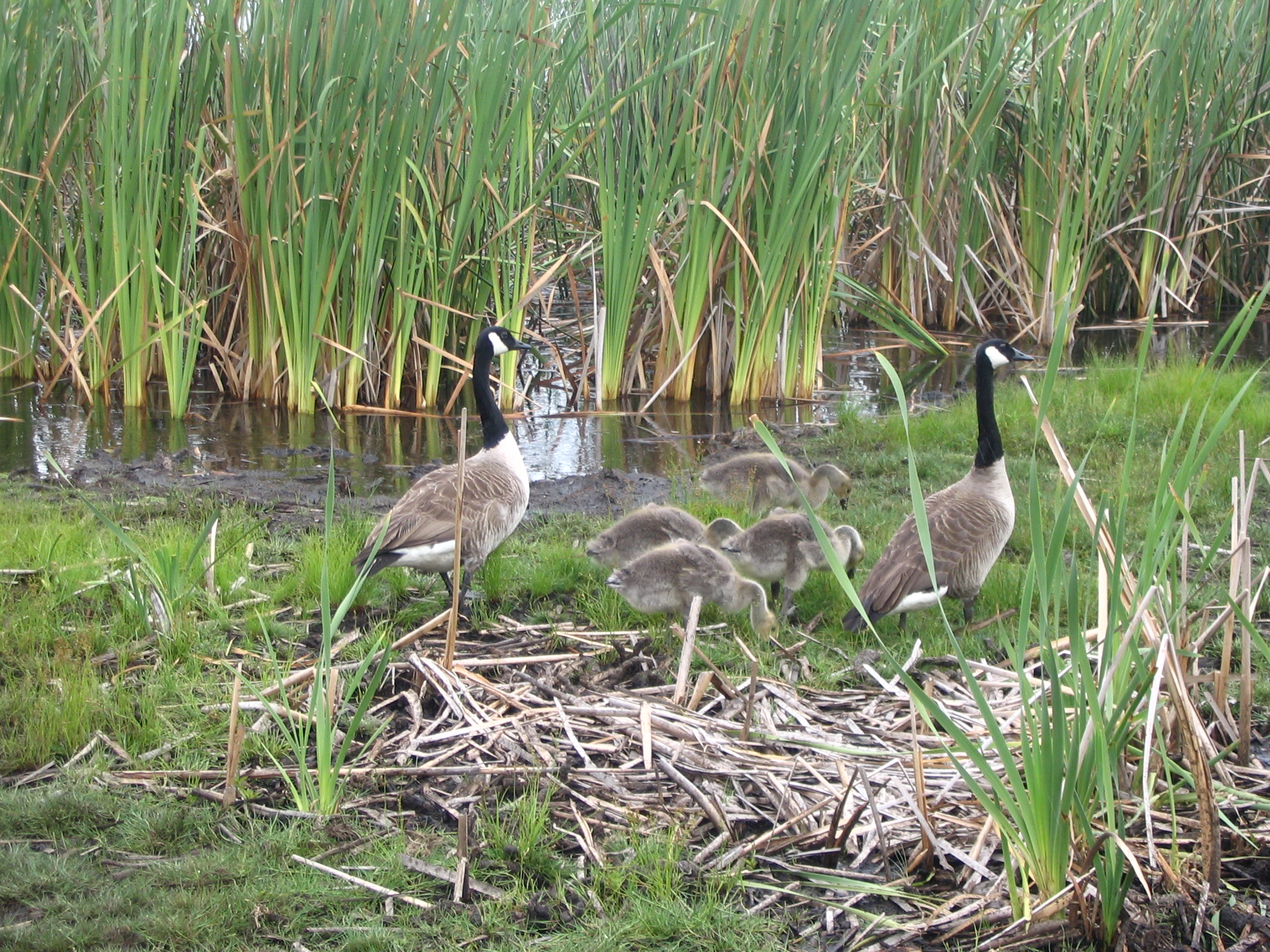 It may seem odd, at first thought, that a green like me would be against a major renewable energy proposal such as the Severn Barrage, but I am. Dont get me wrong though, I am strongly in favour of making the best use of the renewable energy available due to the very large rise and fall of the tide in the Severn Estuary, just not by building a huge barrage across the whole estuary.
Why am I against the barrage idea? What method of extracting energy am I in favour of?
The barrage would be a vast civil engineering project, consuming vast resources. The financial costs alone would be enormous - more than £10 billion. A huge project means huge impacts, particularly environmental ones (the estuary is very rich in bird life and ecolgically speaking is very productive). There could also be huge economic and social costs because such projects are often plagued by huge cost rises due to delays and unforseen problems. Even if there were no delays it would take a long time to build it, but we need to become more efficient and renewable now!
The idea of building tidal lagoons in the estuary to extract tidal energy is a much better one. Tidal lagoons would not cut across the whole of the area. They may well have a postive impact on biodiversity and would not destroy bird habitats. Lagoons could be built a few at a time, each one having a much shorter construction time than a huge barrage. More lagoons could be added, over time, spreading the financial costs and risks.
The issue of being in favour of renewable energy in general terms does not mean being in favour of every single proposal. Its very important to back the project that has the best combination of social, economic and environmental benefits. In the case of tidal energy from the Severn I believe 'smaller is more beautiful' !
Labels:
barrage,
economics,
energy,
scale,
technology
Sunday, November 05, 2006
Save local pool, fight climate change
 With all the ongoing talk nationally about the Stern Report and the need to fight
climate change my thoughts turned to how we need to make the right
decisions about keeping local facilities (which help us to fight climate change
by reducing our need to travel by car). One campaign I'm involved with is
is trying to save my local swimming pool (Jubilee) from closure. I've found it easy to collect
around 400+ signatures to date on a petition and I know others are also
collecting and so the final total will be very large. I've copied below my letters
to my local councillor and the local paper on this issue.
Original Letter:
The decision to close Jubilee Swimming Pool in Knowle is a mistake. Not
only that, Knowle Councillor Gary Hopkins has broken his election pledge
to 'fight any plans to close Jubilee Pool' on his election address. He now
thinks there is 'no realistic alternative' having agreed to the closure
plan as a member of Bristol's Cabinet. I wonder how the voters of Knowle
feel about being let down like this?
Not long ago £200,000 was spent on refurbishing Jubilee Pool ! It is a
well used and valued local facility. To remove it reduces the quality of
life in Knowle. The availability of goods, services and facilities locally
is a key feature of the quality of life and the capacity to live
sustainably.
Swimmers in Knowle would have to travel further to swim after the closure,
adding to air pollution and climate change. The closure may put people off
going for swim, a very healthy physical activity, and it may be those who
find it most awkward to travel further that are most put off, such as the
elderly or families with young children.
When Councillor Hopkins originally made his pledge to fight plans to close
the pool I was pleased to see someone standing up for locally available
facilities and so now feel very let down. I believe he has not fought very
hard to persuade his Lib-Dem colleagues to take a more rounded, balanced,
less purely financial, greener and more democratic decision.
I would like to see them reverse this decision and go back to the idea of
reviewing the situation once the new leisure centre at Hengrove Park
opens. Furthermore, the review should not only be a financial audit but
should also be a social and environmental audit, examining the total
impact of closure and of alternatives to it. This should be combined with
completely open discussions on what it would take to keep Jubilee Pool
open with all its users and other interested parties locally. I believe
someone who really believed in fighting for local facilities would have
strongly argued for this with Bristol's cabinet.
____________________________________________________________________________________
Second letter:
Many thanks to the Bristol Evening Post for printing my letter about the decision to close Jubilee Pool, Councillor Gary Hopkins broken election pledge and the reply I obtained from him. Its good to debate these things in the open. I must say that I feel very dissatified and in fact quite insulted by his reply though.
I wonder if he communicates with all the people that he represents in Knowle this way? When a person who lives in his ward takes an active personal interest in a local issue is it really relevant that they were not present at the Cabinet meeting where the decision was taken? Is it really relevant that they have not previously had contact with him about the issue. I am politically active but did not write to him in this capacity at all!
Its convenient for Councillor Hopkins to blame others for a decision he and his colleagues have taken. Politics based on accusation and counter accusation is common everywhere, not least in Bristol, but it puts people off and causes politics to come into disrepute. Its gets us nowhere if parties simply blame the previous lot.
He talks of 'Hengrove or nothing' when referring to finance availability. Rather than give up and saying there is no alternative I believe it is well worth continuing to try and continuing to talk to people - a lot can change in four years.
He says he has fought for Jubilee Pool but this fighting it seems has now ended. £200,000 has been spent on a pool that he and his colleagues have now decided must close. I'm sure people were led to believe that when such money was spent it was because the facility had a decent future! It seems like economic madness to me to spend and then close.
He even casts some doubt on whether the Hengove complex will be built, saying 'when (or more rightly if) the Hengove complex is built'. If there is any doubt about Hengorve then why decide to close Jubilee now? I'm afraid I cant follow the logic here and certainly am not aware of any doubts about Hengrove!
Councillor Hopkins is right to say that Jubilee may have closed without the previous campaign to keep it open, in which he played a role. He goes on to make a good case for the pool, talking of it being easily walked to and accessed by public transport - this is the kind of facility we need to keep, but he has given up on it. With a little creativity there may be small scope to improve the Jubilee site in some way.
He said 'unlike the Labour Party we did not lie to people'. I dont find accusations of lies very productive. Though straight talking and rational debate is fine it is an indication of the state of big party politics that they all seem to talk of each other as liars like this.
I cant say I am keen on building a new pool when we already have one that has had a lot of money spent on it. The prospect of a new pool in Knowle would be just that, a prospect - it may or may not happen and the plans for it may or may not be acceptable. What is certain is that a swimming facility now exists here!
I've publicly and regularly called for the protection and indeed enhancement of local facilities in South Bristol for around twenty years, though have had no direct recent involvement over Jubilee until now. As a regular pool user and Knowle resident I was very pleased to see the previous defence of the pool by Councillor Hopkins others - I want that to continue, though I note that he did not comment at all on the substantial point in my original letter. This is that 'I would like to see them reverse this decision and go back to the idea of reviewing the situation once the new leisure centre at Hengrove Park opens. Furthermore, the review should not only be a financial audit but should also be a social and environmental audit, examining the total impact of closure and of alternatives to it. This should be combined with completely open discussions on what it would take to keep Jubilee Pool open with all its users and other interested parties locally'.
Is he not willing to tell me if he agrees with me about the process that should be used to assess the situation and make the decision about the pools future?
Labels:
Bristol City Council,
health,
Knowle,
Lib Dems,
local pool,
petition,
quality of life,
sustainable,
wellbeing
Tuesday, October 31, 2006
Climate change action and costs
 Government policies on climate change do not go far enough or fast
enough, just as past 'actions' have
been insufficient, slow or non-existent. UK carbon emissions are 2% higher
now than when Tony Blair came to power in 1997 (Govt's own figures!), despite the apparent
concern !
Successive govts have neglected real action on climate, and now
look where we are, with the Stern Report stating with authority that
climate change could cost trillions of pounds. The upward carbon pollution
trend needs to peak within ten to fifteen years if we are to keep temperature
rise to 2 degrees in the next 50 or 100 years, according to the climate
models.
Taking action in the early 80's or 90's when Greens (including me) were calling for it
would have been both easier and cheaper than it now will be, though acting
now is much cheaper and easier than taking no
action and suffering even more climate change! The chances of success for
any action on climate would also have been higher if we had acted earlier.
The Stern Report has underestimated the extent of economic change needed
to really tackle climate change. We are a factor of ten away from being
sustainable in resource and energy terms and need to establish a new
approach to socio-economics which seems to me to say that we need to gear
much more than 1% of GDP to the task!
Action needs to range across all areas involving the consumption of fossil
fuels at some point in the chain of economic events - these days this
means.....just about everything! Globalisation of trade is of course
rapidly raising carbon emissions levels....Also whilst the Stern Report's
primary focus is the economic impacts of climate change - I think it is
worth remembering the huge social and environmental impacts indicated in his report too! Frankly
its not so much the cost of climate change as the impacts on people and
the natural world that have always concerned me, though you cant of course
separate these off from economics as they are interdependent.
Without an economy which is reconciled with the environment we wont and
cant tackle climate change effectively. Stern and the Government are wrong
if they are saying that we can grow as in the past, but just pay a climate
change bill and carry on.
Labels:
climate change,
economics,
global trade,
Labour,
Tony Blair
Subscribe to:
Posts (Atom)