
Showing posts with label bus rapid transit. Show all posts
Showing posts with label bus rapid transit. Show all posts
Wednesday, September 12, 2012
Tackling transport
Tuesday, June 26, 2012
BRT = Busting relative tranquility

Experts and representatives of cycling organisations have suggested that the buses would put off cyclists and many objectors have focussed on the harbourside as a key battleground.
In documents submitted to the enquiry, Mike Ginger, a former council Cycle Project team leader, said:
"The calm and uncluttered ambience of this unique and historic harbour setting will be shattered resulting in a qualitative reduction in traveller and visitor experience."
He also questioned the general effect on cycling that the new buses would cause.
He said: "It is reasonable to argue that some existing cycling and walking demand will be 'choked off' as conditions deteriorate.
"If cycling demand falls by say a quarter, this would represent a health benefit cost of £8 million euros [£6.5 million] over 30 years."
In a separate document produced by the Bristol Civic Society, objectors said:
"It is proposed that both dedicated BRT buses and regular buses run along the road that separates the new M Shed from the future Umberslade development on WappingWharf.
"We question the desirability of running large vehicles across the new southern entrance of the recently opened M shed."
Finally John Grimshaw, the former Sustrans boss who helped to found the Bristol to Bath cycle path, submitted his own suggestions.
He said: " The proposals cause severance and delay to existing routes, fail to enhance cycling or to provide a continuous route parallel to the BRT, and would, in my view, comprise a worse situation than walkers and cyclists experience at present.
"Overall the BRT provides almost no new benefits for cyclists, whilst at the same time causing considerable severance, delay and inconvenience to existing routes."
He added: "It cannot be desirable to promote an order, largely for the benefit of out-of-town travellers, at the expense of local people travelling by the most sustainable of methods - walking and cycling."
Saturday, June 23, 2012
Tackling transport
 Copy of my comment on this story, trying to bring Bristol City
Council Cabinet Member and Cllr Gary Hopkins (pictured) back reality through proper
transport performance indicators for our city:
Copy of my comment on this story, trying to bring Bristol City
Council Cabinet Member and Cllr Gary Hopkins (pictured) back reality through proper
transport performance indicators for our city: @ gary_hopkins - can I remind you that we need to see positive transport outcomes in Bristol eg traffic reduction, significantly lower congestion and delay, much lower air pollution, carbon emissions falling in line with what best science says is needed and in line with the Climate Change Act...We simply aren't seeing significant improvements in the major performance indicators. I also remind you that part of the current transport plans includes building new roads - hardly likely to produce the transport outcomes I've indicated. If you have solid evidence to the contrary then I'd like to hear it.
Cllr Hopkins reply simply made no comments at
all about traffic reduction - and no comments at all about carbon emissions. On
congestion he said, rather lamely, ‘...conjestion [his spelling] and delays are
down but not by as much as they should be because the dividends of these are
for the time being being swallowed by First instead of being passed on to
customers.’ This appears not to be about overall congestion and delays but in any case admits there is no significant reduction.
On air pollution he admits there is still a problem but that the European
green capital assessment rates Bristol as best (!!!). In his words, ‘Air
pollution is still a problem but it was interesting that the technical
assesment for European green capital rated us best of any entrant on that area.
The BRT will run on non fossil fuel and will make a significant contribution.’
Green capital assessment rates Bristol’s air pollution as best! This
only goes to show how low their standards are. No evidence in his comment to
back the claim that BRT will make a 'significant contribution'. It’s mere
assertion therefore.
Cllr Hopkin’s denied it was mere assertion and gave some additional
waffle and opinion but did not actually give any data or reference to data to
back his assertions. It’s note-able that he simply did not comment at all on
traffic reduction and on carbon emissions from transport which I specified
along with air pollution and congestion as performance indicators. What
forecasting/modelling has been done that shows that current transport plans
will produce significant reductions in these? Does Cllr
Hopkins have this data??
What Cllr Hopkins seems unwilling to recognise and acknowledge is that
key transport outcomes such as overall traffic flow, air pollution, congestion
and delay and carbon emissions are very unlikely to significantly improve under
current transport plans such as GBBN and BRT with its associated road building.
In fact some of them may well get worse. An RAC Foundation report in 2011 said there will be four million more cars will
be on the roads in the next 25 years. It goes on to forecast a 43% rise in
traffic volume by 2035. Department for Transport figures show that by 2035
traffic will rise by nearly 50% and delays more than 50%on average (more here). To make
real and lasting improvements realities have first to be acknowledged. Some useful information on transport in Bristol here.
Thursday, June 21, 2012
Decision before evidence?
 Bristol City Council rejected the chance to build a
tram system despite figures showing it would be cheaper than the proposed new
Bus Rapid Transit link, it has been claimed....Sustraco claimed that Mr Kent [Bristol City Council Cabinet Member for Transport, pictured left]
announced at the end of the meeting that the council had already decided
"before the meeting" that the bus option would be chosen. On
returning from the meeting, Sustraco officials said they found they had been
sent e-mails with a 34-page report attached. The report, which Sustraco said
was written before the meeting, detailed the decision without considering
evidence submitted in the meeting...(full story here)
Bristol City Council rejected the chance to build a
tram system despite figures showing it would be cheaper than the proposed new
Bus Rapid Transit link, it has been claimed....Sustraco claimed that Mr Kent [Bristol City Council Cabinet Member for Transport, pictured left]
announced at the end of the meeting that the council had already decided
"before the meeting" that the bus option would be chosen. On
returning from the meeting, Sustraco officials said they found they had been
sent e-mails with a 34-page report attached. The report, which Sustraco said
was written before the meeting, detailed the decision without considering
evidence submitted in the meeting...(full story here)Only one conclusion can be drawn from this, if what Sustraco say is true. Tim Kent and the Lib Dem Cabinet running Bristol made a decision involving many millions of pounds without considering the all the evidence. Kent met with Sustraco knowing that holding the meeting was pointless given that decisions had already been made! Unless Sustraco's description is shown to be wayward, this is irrational, unreasonable and deceptive behaviour whatever the merits or not of light rail vs BRT.
Friday, June 15, 2012
Bendy buses
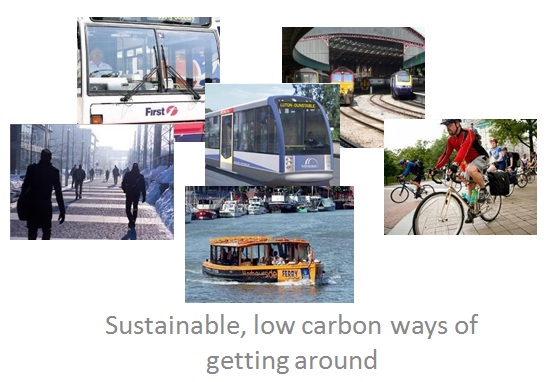 I'm an opponent of the current Bus Rapid Transit plans but
as a keen advocate of communal, public transport I'd like to see investment in
BOTH the Bristol bus and rail system (in addition to walking and cycling) and
in combining all of these smoothly (see story and comments here).
I'm an opponent of the current Bus Rapid Transit plans but
as a keen advocate of communal, public transport I'd like to see investment in
BOTH the Bristol bus and rail system (in addition to walking and cycling) and
in combining all of these smoothly (see story and comments here).Light rail is just about the most energy efficient form of motorised transport and it is likely to be more successful in getting car drivers to switch modes. However, it should not be a matter of rail vs bus, though I acknowledge that there is only so much money being made available.
FOSBR are right to oppose BRT, not least because of unsuitable routes and new roads, but I'm not so sure about all their reasoning. The case I'd make against bendy buses is that they have potential problems with: insufficient effective motive power; slower speed and acceleration due to the extra weight; overheating leading to stalling, or even a fire if diesel fuelled; in crowded areas with narrow streets and tight turns the accident rate may exceed than conventional buses. Bendy buses are supposed to be highly fuel efficient but this must be dependent on the city and the system they are running on and so in practice I have doubts that they will be more efficient in operation than double deckers here in Bristol. Mind you some parts of FOSBRs rail alternative are non-starters - a tunnel under St Mary Redcliffe is both impractical and likely to be far too costly.
There is a problem with money availability if we are to
invest in both buses and rail. Yet we need to invest several times what is
available for BRT if we are to make a serious dent in Bristol’s traffic and
traffic-related problems. It will be interesting to see how the Mayor elected
in November approaches this. There is a problem with our congested roads
because we need to make the existing bus system more effective and efficient
and extensive, if we are genuinely trying to meet targets such as absolute
traffic reduction and significant lowering of pollution - so are we willing to
make a decent number of existing roads car and lorry free?? And would a Mayor
be willing to bite this bullet?
More thoughts on sustainable transport here:
More thoughts on sustainable transport here:
Tuesday, May 15, 2012
Stop BRT2
 Passing on details of this site and campaign. I'm preparing some emails to send to the relevant cabinet members and councillors asking questions and opposing the scheme.
We want BRT2 stopped because
It will not achieve its primary goal of addressing Bristol's transport problems and needs.
It will not achieve its goal because it is a flawed plan, badly designed, too expensive, and will have adverse effects on the city, the environment, and local people.
It will not achieve its goal because it is a flawed plan, badly designed, too expensive, and will have adverse effects on the city, the environment, and local people.
STOP BRT2 | . . . there are better ways
Labels:
BRT2,
bus rapid transit,
buses,
design,
economics,
environment,
needs,
people,
planning,
public transport


Monday, December 19, 2011
Crystal ball forecasting
 60,000 new jobs from the new transport plans in and around Bristol?? Story here. This will sound like a gross exaggeration to many people. On what basis have they made this claim exactly? Crystal ball gazing? This is an argument technique many use to try to justify schemes, such as new roads, that many local people have concerns about. Chief executive of Bristol Airport and transport lead for the Local Enterprise Partnership Robert Sinclair say they believe this is the figure but of course they have an interest in talking up developments they favour - and the only people backing them up in the report are business and political figures who have the same interest, so they add no weight to the claim at all. So, all we are left with is a jobs figure a few say they believe in and no substance.
 Thursday, December 15, 2011
Bristol: Carbon City
 Really Cllr Kent is deluded - he blows his trumpet very loudly indeed when he says Bristol will get the transport system it deserves. Cllrs love it when they can announce they've got money for something almost no matter what it is. For a start building a new road will ultimately add to the congestion and pollution existing now at high levels - its already very costly to business in pounds and costly to people in health and the environment in lost quality and quantity. Bus Rapid Transit is often not the best technology - and persistently asking just a few questions at public meetings on BRT reveals environmental decision making 'systems' that are simply not joined up thinking. Whatever happened to building a low carbon city with a high quality of life for all, the aim of Bristol Green Capital?
See http://www.bristol247.com/2011/12/15/bristol-to-finally-get-transport-system-it-deserves-15367/
Subscribe to:
Posts (Atom)