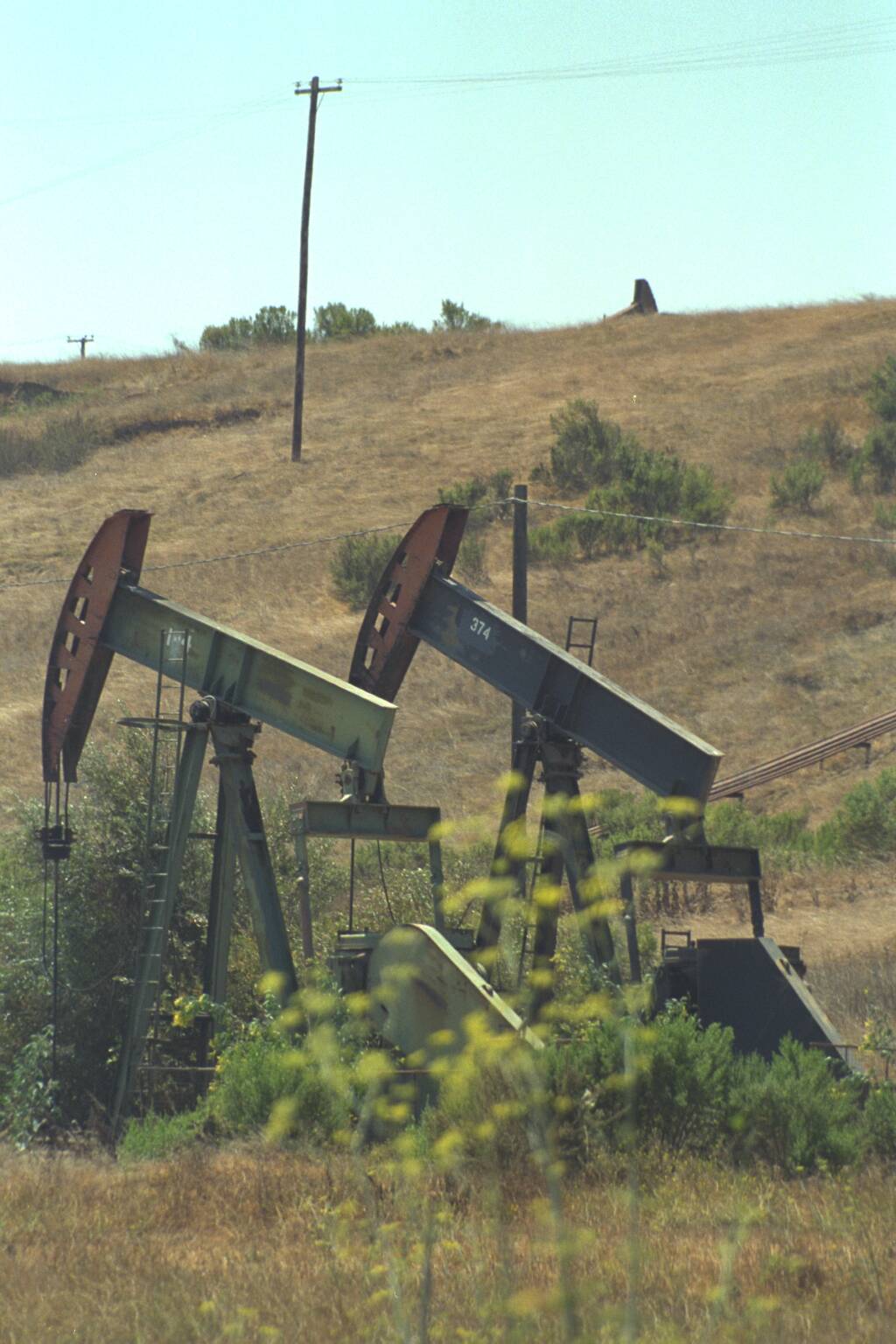
Use of technical means alone, such as using cleaner cars, will not solve our problems and cant be seen as green. History shows that massive growth in car use, encouraged by the technical advance and socio-economic/political context, has easily outstripped any efficiency gains. Technical advance has so far primarily brought cars with improved performance rather than maximising efficiency because people aren't yet prioritising it enough, though this may now begin to change with soaring oil prices. To solve our problems we need to combine technical advance with changes in culture, attitudes and behaviour, which means a whole range of social, economic and political changes, as I try to describe and explain throughout this site.
Views about our real wealth - the natural and social world, the source of our resources and the basis of our lives - and how it can and should be sustained for generations.
Thursday, June 26, 2008
Green car: a contradiction in terms
Use of technical means alone, such as using cleaner cars, will not solve our problems and cant be seen as green. History shows that massive growth in car use, encouraged by the technical advance and socio-economic/political context, has easily outstripped any efficiency gains. Technical advance has so far primarily brought cars with improved performance rather than maximising efficiency because people aren't yet prioritising it enough, though this may now begin to change with soaring oil prices. To solve our problems we need to combine technical advance with changes in culture, attitudes and behaviour, which means a whole range of social, economic and political changes, as I try to describe and explain throughout this site.
Wednesday, June 25, 2008
Local renewable energy, built before your eyes
Excellent timelapse film showing the construction of the wind turbines at the Port of Bristol:
Tuesday, June 24, 2008
Irrational, emotive vitriol against money for cycling
As if any further proof were needed that the Government and local council have well and truly lost the plot, the announcement that those evil-doing two-wheeled terrorists of the modern world - cyclists - are to get a big fat government grant finally seals the deal ("£11.4 million to create first Cycling City", Post, June 19.In a world where it's commonplace and de rigueur to shower the unworthy and pitiful with handouts, benefits, rewards and incentives in a vain and futile attempt to appease and silence the minorities, this barmy cycling scheme is a step too far.And it's one that will further create division, resentment and anger among those of us whose lives are already blighted by this wannabe- superior, duplicitous, irritating, dangerous, sanctimonious and arrogant crowd.£22 million is a lot of cash - cash that could be pumped into schools (already struggling for funds and under the threat of closure), hospitals (already struggling for funds and under the threat of closure), local post offices, community schemes and elderly care homes (already struggling for ... see the pattern here?).And yet a gaggle of self-serving, do-gooder politicians have the temerity, conceitedness and ignorance to pile cash on one of the greatest scourges of contemporary Britain like it's going out of fashion.What's becoming more and more clear is that the more bothersome, annoying and unsavoury you are (individual or group), the greater your rights and the more important and unquestionable your demand to fleece the taxpayer.So, we'll get more cycle lanes (read as more road works and disruption), more initiatives and more cycle training to get us out of our cars and on to our bikes.The council is even planning "Bikeability" schemes in schools - which sounds more like indoctrination to me, soiling children's innocent brains to cultivate its own cycling clone army.I can see the training itinerary now: day one - Lycra and helmet awareness; day two - rudeness and inconsiderateness made a fine art.(And how it could ever be considered a good idea to encourage these mealy-mouthed morons is another topic altogether.)The whole scheme is a farce - a naive, over-simplistic, ludicrously out of touch and inconceivably unrealistic gimmick.We'll have councillors waxing lyrical about how fantastic it all is and how it's another step towards becoming more eco-friendly, sustainable and green and how their long-dreamt, misty-eyed fantasy of every Bristolian donning fluorescent Lycra, wearing silly helmets, ringing stupid bells and knocking innocent pedestrians off their feet may now become a reality.And make no mistake, cyclists are criminals.Let me remind you, it's still illegal to cycle on pavements, run red lights, ride the wrong way down a one way street, whizz through pedestrian crossings (when pedestrians are actually crossing them) and hop from road to pavement with reckless abandon and the attention span of an amoeba.And yet they're not treated as criminals - rather, they're elevated as warriors fighting against an irresponsible and polluted world, two-wheeled titans of a healthy and eco-conscious crusade and martyrs of an ethical and planet- saving battle that will one day have us all reading The Guardian and recycling our potato peelings.Rubbish. They're law-breaking lunatics masking their own inconsiderate egos under the pretence of doing something right-on and commendable.And I only need witness the number of people hit, nearly hit, inconvenienced and harassed by these cycling psychopaths on my daily walk to work to know this as fact.That's no inconvenient truth.It won't ease congestion, it won't reduce pollution, it won't make the city a safer place to live ("cyclists" and "safety" being something of a mind-bending contradiction) and it certainly won't boost Bristol's profile on the global stage as a tough, robust and competitive city.We'll be seen as a bunch of wimps on two wheels and be laughed off the stage to the holler of boos and hisses.So cyclists will carry on being annoying ("don't tar us all with the same brush ???", "I'm not damaging the ozone layer ???", "I'm having lentils and tofu for tea ???"), councillors on the board of Fatuous and Phoney Statistics in the Cuckoo-land of Sustainable Stupidity will carry on being deluded and pedestrians and motorists will carry on hating their guts.I feel the disapproving public's full wrath has yet to hit its critical meltdown.In the meantime - and from a pedestrian's point of view - let me remind you there's nothing attractive (especially after a full English breakfast) about seeing an elephantine derriere zooming past you at 8.30 on a Monday morning.And that's more than enough to put me off ever becoming a cyclist.
Your letter ('Not all Bristolians want to become a cycling city', Bristol Evening Post Soapbox, 24 June) is very far from a genuine argument Jamie Caddick, to say the least. There is extraordinary accusation, name-calling, stereotyping, vitriol, cynicism, insult, exaggeration and ignorance aplenty. I wonder if your letter is more likely to be persuade people that actually the money for cycling is pretty reasonable such is your ranting onslaught. Its surely hard to argue that investment in non-motorised transport is wasted in these times of soaring petrol/diesel prices, severely congested roads, massive parking problems and obesity-related ill-health? Dont the most vulnerable in our society, the very young, those with health problems and the elderly, suffer most from the air pollution caused by cars and lorries? OK, contrary to council claims this investment wont be a magic bullet that solves all our transport problems - they too are exaggerating about what this money can achieve (see here for further comments) and have yet to do the hard work of using the money in the most appropriate ways in practice. However, it is a step in the right direction and I think most people prepared to look at transport issues and budgeting in the round agree.
Sunday, June 22, 2008
Neither Stalin nor Mr Bean is good for green plans!!
Apparently our government has big green energy plans (see here). This is great, provided they are in fact big, by which I mean sufficient to genuinely and promptly build energy security, cut oil dependence and tackle climate change. This is great, provided they are in fact green, by which I mean efficient, renewable, respectful of environmental limits, meeting needs by fair means, not passing problems to future generations. This is great if they are part of an overall strategy that is coherent and consistent, by which I mean that attention is paid to both what we should and should not be doing, such as building new coal-fired power stations, expanding airports, expanding nuclear power, building hundreds of miles of new roads, fuelling national and global consumerism.At first sight the green energy headlines this weekend looked quite good. But there are many problems with the scale, pace, details, green credentials and perhaps most of all with the consistency of the plans within overall government policy. A key problem is that our PM, Gordon Brown sends out incompatible signals all the time: he wants his Saudi friends to raise oil production to try to lower prices but says he wants reduced oil consumption; he previously thought calling a general election was a good idea and then thought it wasn't; he introduced a ten pence tax band and praised it, then got rid of it, then said the consequences of getting rid of it were bad but only planned partial compensation; he was thought of as first Stalin and then Mr Bean (to borrow a phrase).
Ctrl.Alt.Shift
Friday, June 20, 2008
Petitions submitted and followed up on today
_____________________________________________________
Council policy should be driven by what's best for Bristol - green spaces policy is driven instead by a shortage of cash, and an apparent need to provide for the development growth prescribed by Westminster. Continued growth according to this pattern deteriorates quality of life for Bristolians and should be resisted.
Selling off green space is selling off what the public say is one of the best aspects of Bristol. It's not sustainable - consider our climate, health and wildlife needs. It's bad policy and is inconsistent with council statements on fighting climate change, improving biodiversity and working for healthier lifestyles.
Can we all see the evidence that the land to be sold will be 'marginal, surplus, or of low recreational value'? No lists, no maps, no debate, has made this clear to the public. This land classification is highly subjective and so should be subject to open debate. Where are the 90 acres?
Small scale selling off land may well sometimes make sense - if it really is surplus, and could be put to better use. That should be considered on a case-by-case basis with full debate about what is surplus and what is better use. Change of land use should be that which makes the city more not less sustainable. We should not be trying to meet a sales target, whether 90 acres or some other figure, with respect to Bristols's land. I call on the council to abandon any figure for the number of acres to be sold off and adopt this case-by-case approach instead.
______________________________________________________
I've received no ackowledgement of receipt as yet but assume things are ok.
Also followed up on my petition on the PM's website about measuring wellbeing instead of money flow as our main indicator of progress. I've previously emailed the PMs office by got no reply and so today asked my MP to respond herself as well as forwarding the petition to a minister to respond. I dont expect to get agreement from either MP or government but feel they should respond, not least because an MEP and several councillors signed the petition as well as well over 100 other people.
Thursday, June 19, 2008
Good green news for Bristol!!
Create the UK's first on-street bike rental network
Establish a 're-cycling' scheme that repairs bikes and provides them free of charge to deprived communities
Build state-of-the-art facilities for cyclists commuting to the city centre
Create a dedicated cycleway to link the suburbs with the city centre
More than double the number of children receiving cycling training
Develop a Personalised Travel Plan programme, focusing on changing the way people conduct short journeys to work (see here and here for more)
Well done to all involved in winning this cash!! (Would have been even better if the pot of money had been bigger of course!).
Plus the local press reports that rail links to Portishead could feasibly be updated and up and running by 2014 ('Rail link 'could be running by 2014'', Bristol Evening Post, 19 June). Plus Bristol's compostable food waste will no longer be sent hundreds of miles by lorry to Dorset for processing after 2010 as a new composting facility just outside the city should be operating by then ('New 20 yr contract to compost food waste', Bristol Evening Post, 19 June).
Most of the work is still to be done, of course, in all three areas above, to make plans reality in an appropriate way. And then there are areas where there are no adequate plans for: efficiency; renewability; environmental limits; meeting needs; strengthening community; fairness...but more on these aspects of sustainability on other days.
Wednesday, June 18, 2008
Count carbon correctly councillor !!
Give Lib Dem Cllr Neil Harrison what is due to him. He has worked persistently on getting the 'Merton rule' on a minimum % of renewable energy in new housing developments, adopted by Bristol City Council and deserves congratulations ('New Bristol homes have to be eco-friendly', Bristol Evening Post, 18 June). Greens have already welcomed his work (see Green Cllr Charlie Bolton's blog).
I must take issue with his comments on the figures in the local press however. He correctly says that Bristol has a target of 60% carbon emissions cuts by 2050 and then says,
'Taking this step [ie 20% renewable energy in all new housing that Cllr Harrison has fought for] will make that achievable and take us closer to becoming a green capital'.
It may take us a bit closer to becoming a green capital as its a step in the right direction but there is no way that taking the step of having 20% renewable energy in all new housing can on its own achieve an overall 60% carbon emissions cut across Bristol by 2050 - anyone can see that the figures just dont add up.
I thought this considerable inaccuracy could be down to reporting quality. However, its seems more likely that Cllr Harrison is either not seeing the figures in their proper context or is blowing his own trumpet too loudly, or both (lets face it, it wouldn't be the first time a Lib Dem has talked up their environmental achievements in Bristol). He says,
'This approach will make a massive dent in the city's carbon footprint in years to come'.
Any effect on the city footprint is very unlikely to be massive since this approach only applies to new housing, a small proportion of total housing, and in any case housing is only one contributor to our total carbon footprint albeit a fairly significant one. [Authors note 22/6/08 - average footprint per household may well go down a bit but total footprint will rise because of the new housebuilding itself. Office for National Statistics projections show Bristol's population soaring by over 30% , from 410,500 in 2006 to 542,800 by 2031, which will affect all plans, targets and work of the council markedly if/when/as it comes about - See 'Huge rise in Bristol's population is looming', Bristol Evening Post, 14 June]
I'm also wondering how the government 'ambition' of all new homes being zero carbon by 2016 is to be achieved in practice. Building firms are already warning about the impact of this on the number of houses that can be built. I strongly agree with the ambition but in 2008 Cllr Harrison has had to work very hard over several months to get the council to agree to just 20% renewable energy in new build housing - there seems to be far too little drive here if the zero carbon ambition is to be achieved.
Tuesday, June 17, 2008
UK Govt seeks delay in meeting tougher air quality standards
Get real time information on air pollution in your area of Bristol here. Todays air pollution index for both Wells Rd in Knowle and Bath Rd in Brislington, between which my house is sandwiched, was low by current standards, though it obviously fluctuates and I note that the British Lung Foundation report that even low levels of air pollution increase death risk (see here) !!
Full council wont debate Bristol primary school closures and mergers: what sort of local democracy is that!!
Sign the online petition to save St George's Primary from closure here:
http://epetitions.bristol.gov.uk/petition.php?id=192
Visit the St Georges Primary School website: http://www.stgeorgeprimary.ik.org/p_Home.ikml
Sign the online petition to save Stockwood Green Primary here:
http://epetitions.bristol.gov.uk/petition.php?id=195
Visit the Stockwood Green Primary School website: http://www.stockwoodgreen.ik.org/
Monday, June 16, 2008
Wildlife-rich Malago Greenway
Just one piece of evidence (below) showing just how rich in wildlife the Malago Greenway is (its biodiversity is threatened by a possible Bus Rapid Transit route - see 'Bristol Green Route Under Threat', Bristol Evening Post, 6 June). This was posted on malago@yahoogroups.co.uk by Kingfisher Group campaigner Nixie James-Scott (send an email to: malago-subscribe@yahoogroups.co.uk to join the group and get updates):
I have found and copied the information about the sightings of
the extremely rare Firecrests earlier this year down by the Malago
Greenway behind Cotswold Road. This was on the Rare Bird Alert
website. I myself sat with a pair of them in the garden not more than
a metre away from me watching them dart about in our grape vine.
Others from the Kingfisher group have seen them too. I am going to put
a message on the RBA website to see if any of the birdwatchers who
came to see the Firecrests could send us any of their 'photos. They
also spotted Lesser Redpolls. We have an amazing plethora of birdlife
here including blackcaps, goldfinches, greenfinches, chaffinches, long
tailed tits, blue and great tits also coal tits. We have blackbirds,
wrens, occasional thrushes, house and hedge sparrows, wood pigeons,
collar doves, magpies and crows. Also Mallards and coots nesting on
the banks of the Malago. I'm sure to have missed some out. Then there
are the bats, pipistrelles I think, an amazing variety of moths and
butterflies. Holly Blues and a hawk moth a couple of years ago.
occasionally spotted Kingfishers too of course!
Just thought I'd mention the amazing range of wildlife which would be
made homeless if the area is paved over!
Please let us know of any other (animal!) wildlife you have seen in
the area, ah yes then the foxes...........
I have found and copied the information about the sightings of
the extremely rare Firecrests earlier this year down by the Malago
Greenway behind Cotswold Road. This was on the Rare Bird Alert
website. I myself sat with a pair of them in the garden not more than
a metre away from me watching them dart about in our grape vine.
Others from the Kingfisher group have seen them too. I am going to put
a message on the RBA website to see if any of the birdwatchers who
came to see the Firecrests could send us any of their 'photos. They
also spotted Lesser Redpolls. We have an amazing plethora of birdlife
here including blackcaps, goldfinches, greenfinches, chaffinches, long
tailed tits, blue and great tits also coal tits. We have blackbirds,
wrens, occasional thrushes, house and hedge sparrows, wood pigeons,
collar doves, magpies and crows. Also Mallards and coots nesting on
the banks of the Malago. I'm sure to have missed some out. Then there
are the bats, pipistrelles I think, an amazing variety of moths and
butterflies. Holly Blues and a hawk moth a couple of years ago.
occasionally spotted Kingfishers too of course!
Just thought I'd mention the amazing range of wildlife which would be
made homeless if the area is paved over!
Please let us know of any other (animal!) wildlife you have seen in
the area, ah yes then the foxes...........
Lets hope any BRT route can avoid this rich green space. Previous post on this issue here. New campaign website is http://www.malagogreenway.org.uk/
Sunday, June 15, 2008
History of petrol prices
'To take one [admittedly extreme] date: indexed to 2007’s value of the £ sterling, in 1916 a gallon of petrol in the UK cost approximately £8.40 which works out at around £1.85 a litre, and that was before governments had really discovered how much duty and tax they could start putting on the stuff. If that’s too far back, take 1957; ‘only’ fifty years ago, just after the Suez crisis, the UK gallon retailed for £5.26 in today’s money – that’s £1.16 a litre. If that’s still too far back, let’s take a “Life on Mars” trip back to late 1973, around the time of the first modern ‘oil crisis’ following the 1973 Arab-Israeli war; at that point the UK gallon was selling at £4.65 in today’s money, which is equivalent to £1.02 per litre, with a similar figure in 1979 around the time of the US/Iranian Hostage Crisis.'
'Enough history. The fact that today’s fuel prices aren’t uniquely high in real terms doesn’t mean that they won’t bring their own problems. Firstly there’s the general economic impact of fuel pricing; transport costs are an unavoidable necessity for most people, not optional spending. Hence when transport costs go up, and before disposable income has had a chance to follow [i.e. wage inflation..] something has to give. Usually that’ll be retail sales. Some of the big High Street names had already announced their ‘Pre-Christmas Sales’ season in mid-November. A further impact of fuel pricing is due to the fact that virtually all of the goods we buy and sell are transported by road [not that rail or air transport will be immune to oil price rises anyway] and so the cost will go up. Look at that again: customers with less money to spend, suppliers with rising costs; there’s a squeeze somewhere in the middle there – looks like it’s the wholesaler and retailer who’ll be taking the pressure from both directions.'
Friday, June 13, 2008
UK Census 2011: Alert - a liberty issue for all (and one for David Davies??)
Received this today (thanks to Jean for this) and thought it well worth passing on. Wonder if the newly resigned former Shadow Home Secretary David Davies would take up this issue of liberty? Email sent to my MP and local councillors today.
The next UK Census (in 2011), in which participation is compulsory, might be run by an arms company with close links to the United States government, and which also focuses on intelligence and surveillance work. See below for more info.
The decision is now imminent. Sign the petition today: (Deadline to sign up by: 15 June 2008)
Petition on the Downing Street website -
http://petitions.pm.gov.uk/census-alert/
What's the problem?
The process of running the 2011 Census will be contracted out by the Office of National Statistics to a private company.
One of the two contractors in the final round of selection is the arms company Lockheed Martin, 80% of whose business is with the US Department of Defence and other Federal Government agencies.
This might concern you because:
The Census rules mean that every household will be legally obliged to provide a wide range of personal information that will be handled by the chosen contractor.
Lockheed Martin produces missiles and land mines which are being used in Afghanistan and Iraq and which are illegal in many countries. They also focus on intelligence and surveillance work and boast of their ability to provide `integrated threat information´ that combines information from many different sources.
New questions in the 2011 Census will include information about income and place of birth, as well as existing questions about languages spoken in the household and many other personal details. This information would be very useful to Lockheed Martin´s intelligence work, and fears that the data might not be safe could lead to many people not filling in their Census forms.
Census Alert is therefore campaigning to stop Lockheed Martin from being given the contract.
The campaign is supported by the Green Party, politicians from Plaid Cymru, Labour and the Scottish National Party, and others opposed to the arms trade and concerned about personal privacy.
We are not opposed to the Census itself. Aggregated, the information collected is important in allocating resources to local authorities and public services. But personal privacy is important too, and we are concerned that Lockheed Martin's involvement could undermine public confidence in the process and lead to inaccurate data being collected. There is still time to stop this happening and we are not calling for a boycott of the Census at this stage.
Before the final decisions on the contract are made, we are asking you to do the following:
*Sign our petition opposing arms company involvement in the Census.Contact your MP and ask them to raise the issue in Parliament.
*Contact your local Councillor and ask them to highlight their concerns about the allocation of local authority resources.
The next UK Census (in 2011), in which participation is compulsory, might be run by an arms company with close links to the United States government, and which also focuses on intelligence and surveillance work. See below for more info.
The decision is now imminent. Sign the petition today: (Deadline to sign up by: 15 June 2008)
Petition on the Downing Street website -
http://petitions.pm.gov.uk/census-alert/
What's the problem?
The process of running the 2011 Census will be contracted out by the Office of National Statistics to a private company.
One of the two contractors in the final round of selection is the arms company Lockheed Martin, 80% of whose business is with the US Department of Defence and other Federal Government agencies.
This might concern you because:
The Census rules mean that every household will be legally obliged to provide a wide range of personal information that will be handled by the chosen contractor.
Lockheed Martin produces missiles and land mines which are being used in Afghanistan and Iraq and which are illegal in many countries. They also focus on intelligence and surveillance work and boast of their ability to provide `integrated threat information´ that combines information from many different sources.
New questions in the 2011 Census will include information about income and place of birth, as well as existing questions about languages spoken in the household and many other personal details. This information would be very useful to Lockheed Martin´s intelligence work, and fears that the data might not be safe could lead to many people not filling in their Census forms.
Census Alert is therefore campaigning to stop Lockheed Martin from being given the contract.
The campaign is supported by the Green Party, politicians from Plaid Cymru, Labour and the Scottish National Party, and others opposed to the arms trade and concerned about personal privacy.
We are not opposed to the Census itself. Aggregated, the information collected is important in allocating resources to local authorities and public services. But personal privacy is important too, and we are concerned that Lockheed Martin's involvement could undermine public confidence in the process and lead to inaccurate data being collected. There is still time to stop this happening and we are not calling for a boycott of the Census at this stage.
Before the final decisions on the contract are made, we are asking you to do the following:
*Sign our petition opposing arms company involvement in the Census.Contact your MP and ask them to raise the issue in Parliament.
*Contact your local Councillor and ask them to highlight their concerns about the allocation of local authority resources.
Thursday, June 12, 2008
So-called 'major shake-up' of senior Bristol City Council Officers appoints same people to three key posts - shake-up it ain't!
The story that 'Three of Bristol City Council's most senior officers have held on to their own or new positions in a major shake-up.' (yes the local paper did say major shake-up!) prompted Chris to say:
'The whole history of this council over the last 40 yrs has been one of incompetence and wastefulness. To reappoint present post-holders who have had nil impact on the general shambles that represents local govnt. in this area is astounding. You only have to look at cities like Leeds and Manchester that have had integrated transport systems in place for years to realise just how porly we are served. They seem more concerned in apologising for our history (not that one is needed) rather than planning for our future. Lets have a publicly elected Chief executive whose ideas and plans would be up for public scrutiny first.'
My own view is that these people are overpaid underachievers who are not looked upon with confidence by Bristol's public (correct me if I'm wrong by commenting on this post). Council leader Helen Holland talks of 'further excellent appointments' which shows how out of touch she is - with regard to these three key appointments the so-called 'major shake-up' has resulted in the same people being employed, so its not a shake-up at all!! A shake-up is definitely needed but this ain't it!!
Severn barrage: not cost-effective (now there's a surprise - NOT!)
I've been plugging away with this message on the barrage for some time now! (see here for a whole string of postings with this very message about the dodgy economics of the barrage in them).
Wednesday, June 11, 2008
Sustainable living: an essential not a luxury add-on
Her statement sounds to me like a denial of problems that are real, serious, and urgent, like peak oil production and climate change, which are inseparable from soaring food and fuel prices. Best science and economics tells us we have to adjust and adapt our lives, which means fully embracing sustainability’s key concepts: efficiency; renewability; environmental limits; meeting needs; fairness here and around the globe, for both present and future generations.
Sustainability is not an add-on luxury, its an essential – though our government has failed to lead on this, get this message across and make it easier for people to make practical, sustainable choices.
Tuesday, June 10, 2008
Craziness of axing bus routes - how does this encourage bus use??
Monday, June 09, 2008
Price of diesel reaches £1.30/litre in Bristol....
Those who for example react to describe not living close to work and being poorly serviced by buses/trains correctly highlight two aspects of the issue that need to be addressed very urgently (and that we should have begun addressing at least two/three decades ago when greens were, as now, advocating localised development etc). Having said that, whilst I appreciate the individual circumstances some people are in, there are many who could choose a greener alternative (nearly half of all car journeys are less than 2 miles long).
Government has completely failed to make it easier and more convenient for people to make green choices however and so they need to take the lion's share of the blame here. Re-allocate just a quarter of the road budget and in ten years we could build light rail systems in eight cities, create 10,000 people-friendly home zones, put £4 billion into cutting train and bus fares, £1 billion into rural transport and another billion into transport for disabled people. Add to that safe routes to all our schools and colleges and tens of thousands of new jobs and it's money well spent (see here for more detail of green transport policies).
Friday, June 06, 2008
Another green route threatened by bus rapid transit proposals
The fight to save Bristol primary schools...
Biofuels, food prices, biodiversity, Spiderman, meat - or the connection between them all??
I've wondered, should I decide to post today, world environment day, just what I would write about.
Perhaps the latest warnings about biofuels causing higher world food prices as discussed at the UN food summit in Rome, featuring strongly on the BBC news this evening?
Or the recent report 'The Economics of Ecosystems and Biodiversity (TEEB)', described as the first major report to outline the economic impact of cutting the variety of life (severe impacts on the worlds poorest and costs of up to £40 billion every year, 7% global GDP decline by 2050 if ecosystem damage is not tackled...) ?
How about saying that Alain Robert, the French Spiderman, has today been in New York City climbing a huge skyscraper to promote the message that we need real leadership on climate change from the G8 countries meeting next month (According to him "The Solution Is Simple":
1 – Stop Cutting Down Trees. Plant More Trees. 2 – Make Everything Energy Efficient. 3 – Only Make Clean Energy.).
I'm conscious that I've not posted much on the subject of diet and environmental impacts, in particular the amount and type of meat eaten, so perhaps something on this topic, reasonably well discussed on Newsnight a few days ago following comments from the head of the UN climate agency, Yvo de Boer, who is attending UN-led climate talks in Germany this week that we should all become vegetarians. After all in times of high food prices should we, at great environmental cost, be feeding grain to cows and pigs instead of people?? I really like meat but its a highly inefficient food to produce and consume and I acknowledge the very strong ethical, ecological, economic and health case for vegetarianism and veganism (I try to keep my meat consumption right down - I'm not a veggie).
Interesting how intimately intertwined issues of environment, energy, economics, food, climate and personal choices/behaviour are isn't it.
Perhaps the latest warnings about biofuels causing higher world food prices as discussed at the UN food summit in Rome, featuring strongly on the BBC news this evening?
Or the recent report 'The Economics of Ecosystems and Biodiversity (TEEB)', described as the first major report to outline the economic impact of cutting the variety of life (severe impacts on the worlds poorest and costs of up to £40 billion every year, 7% global GDP decline by 2050 if ecosystem damage is not tackled...) ?
How about saying that Alain Robert, the French Spiderman, has today been in New York City climbing a huge skyscraper to promote the message that we need real leadership on climate change from the G8 countries meeting next month (According to him "The Solution Is Simple":
1 – Stop Cutting Down Trees. Plant More Trees. 2 – Make Everything Energy Efficient. 3 – Only Make Clean Energy.).
I'm conscious that I've not posted much on the subject of diet and environmental impacts, in particular the amount and type of meat eaten, so perhaps something on this topic, reasonably well discussed on Newsnight a few days ago following comments from the head of the UN climate agency, Yvo de Boer, who is attending UN-led climate talks in Germany this week that we should all become vegetarians. After all in times of high food prices should we, at great environmental cost, be feeding grain to cows and pigs instead of people?? I really like meat but its a highly inefficient food to produce and consume and I acknowledge the very strong ethical, ecological, economic and health case for vegetarianism and veganism (I try to keep my meat consumption right down - I'm not a veggie).
Interesting how intimately intertwined issues of environment, energy, economics, food, climate and personal choices/behaviour are isn't it.
Wednesday, June 04, 2008
Knowle sustainability and quality of life group: success!
http://www.pledgebank.com/
http://www.pledgebank.com/yesCASK
Tuesday, June 03, 2008
The story of stuff
http://www.storyofstuff.org/ really worth going here (watch the short film below).
Ok the examples are often American but the message is universal. So, just where does stuff come from, where does it go, and what effects does the coming and going have??
Sustrans' annual 'Change Your World' campaign
Sustrans' annual ‘Change Your World’ campaign kicks off today with the launch of www.changeyourworld.org.uk . To join in, tell us you'll swap a car trip during the first week of July and walk, cycle or use public transport instead.
Please consider doing you bit by supporting this campaign, perhaps committing to cut your car use even more if you can (the rising price of fuel and the spiralling of climate change impacts gives plenty of incentive for this!). What I really want from the government is concerted, significant and sustained action and investment into walking cycling, public transport (trains generally, light rail, buses...) and car clubs, to make minimising car use easier - let your PM, MP and local councillors know if you agree!!
The Green Party website says 'Re-allocate just a quarter of the road budget and in ten years we could build light rail systems in eight cities, create 10,000 people-friendly home zones, put £4 billion into cutting train and bus fares, £1 billion into rural transport and another billion into transport for disabled people. Add to that safe routes to all our schools and colleges and tens of thousands of new jobs and it's money well spent.' Eminent good sense given the twin problems of peak oil and climate change.
Money before quality of education for Bristol's primary schools??
In a smaller school community all teachers, pupils and parents can get to know each other better and stronger, more educationally beneficial relationships can be established. This clearly adds to the quality of education for every individual child, as testified to by the parents protesting and indeed by Ofsted when they said last year that at Stockwood Green Primary 'everyone feels involved, trusted and valued'. I hope the council rethinks their plan to have fewer, bigger primary schools (see previous posts on this here and here).
Monday, June 02, 2008
Happiness: no laughing matter
So, what is going on here? Does wealth not count towards happiness at all? Happiness research shows that once people reach a certain wealth level, some say £10,000/yr, others the national average income of about £23,000, more money does not on average make people or the country happier.
Why this is so has been explored by people like psychologist Oliver James, one of the key speakers at the Bristol Happiness Lectures along with Dr Chris Johnstone from the University of Bristol, in his books Affluenza (derived from the terms affluence and influenza) and The Selfish Capitalist. An affluenza suffering society is where people are overloaded and stressed due to fast, urban lifestyles and long hours of work. They are often in debt, anxious, depressed and wasteful/polluting because of their dogged pursuit of more and more. People try to ‘keep up with the Joneses’ but gain no fulfillment from this as they go around the viscious circle of consumption.
Buying does not generally make people happy – apparently walking through a shopping mall increases stress and lowers self-esteem (whereas walking in the park or countryside relieves stress). Our society clearly does assign a high value to money, possessions and appearance, making affluenza and associated emotional distress more likely. It may also promote the banishment of negative thoughts in place of realism, even though people like James and Johnstone say this is not always advisable. Those banishing negative thoughts may well play down threats in place of facing them and may go further, taking riskier decisions than is wise. It strikes me that this could be a part of climate change denial for instance.
Enough of the negative! What can be done to make us happier? Dr Chris Johnstone says that its meaning, purpose and facing up to world problems that builds happiness. He sees very strong connections between sustainability and happiness issues – tackling one helps tackle the other. Contented families, strong local communities, meaningful work and building a future that is cleaner, safer and more efficient is what is needed then. Economically it mean addressing inequalities and emphasising stability, security and localisation in place of growth and globalisation ie different goals and adopting a different world-view. This means transforming politics, which is what Greens are about.
Green Bristol Blog
Bristol's other green blogs apart from this one:
Green Councillor Charlie Bolton
Bristol Greengage
Any other local bloggers who regards themselves as green - feel free to get in touch if you want!!
Sunday, June 01, 2008
Rational debate on city's waste issue??
However, elsewhere in her letter she offers up very personal criticism of Lib Dem Councillor Gary Hopkins, to whom she was replying, by stating 'he always knows best' and later that 'he sneers' and that 'his side of the debate is fuelled by emotional hot air'. These observations may or may not be true but they are certainly not the kind of debate her own letter calls for!
Much of the rest of her letter is in fact very party political - who did what and when stuff, intent on laying blame with the opposition and deflecting it from Labour. So much for the rational approach that 'is needed'! Little wonder that debates on key issues often become poor when such insult and naked party-politics are brought into play.
I note that no-one from the council has chosen to reply to my, rational, contribution to the waste debate published in the Post recently (adapted from this blog post). In it I made a, rational, case for opposing mass incineration, pointing out that incineration with energy recovery is a mere fourth out of five in the waste management hierarchy. I asked why in these so-called green times government and council have not worked more effectively together on the top three priorities: waste avoidance/reduction; reuse; and recycling. If we dont address the waste issue correctly, focussing on the top priorities first, we will not build a green city and country. Will Councillor Price oblige me with a reply??
Thursday, May 29, 2008
Brown doesn't want to retreat from his 'green agenda' - but he doesn't have a proper green agenda to speak of!!
Our Prime Minister's thoughts on nuclear power provide another good example. Yesterday Gordon Brown strongly advocated more ambitious nuclear plans, with some building in new locations as well as replacing nuclear stations on existing sites (see here). The day before however the Nuclear Decommissioning Authority said that the costs of cleaning up the dangerous radioactive mess from existing nuclear sites has soared to £73 billion (see here for more) !! Doesn't make more nuclear sound like good economics or good ecology does it - we know that the government and our money is the ultimate insurance when things go badly wrong and get dirty and dangerous with this so-called 'clean' power source.
Arguing that nuclear power is somehow green has always been ridiculous - the case against it is very strong indeed.
Wednesday, May 28, 2008
Knowle West people start their own smallholding with Hugh Fearnley-Whittingstall...
It turns out that the people concerned live in Knowle West, not far from me, and like me are part of the Knowle West Carbon Makeover Project (which I will blog more about in the coming months - its an award-winning project). Perhaps I'll try to have a chat with the local people involved in the program to find out exactly what the whole experience has been like so far (the food production and involvement with tv production and personalities...). One thing I'm fascinated by is Hugh Fearnley-Whittingstall's statement in his Radio Times magazine interview that 'We've found an obscure law that suggests that if six or more households from an area request land to grow food, their local council has to respond.'. Will more be revealed in tonight's program?
Monday, May 26, 2008
More green talk but little/no green action on renewable energy
'I...support an expansion in our renewable energy generating capacity. I believe lessons can be learned from Europe in introducing the feed-in tariff and think that this is an area that should be further investigated to assess its suitability for the UK.'
Frankly, talking about further investigation is just not good enough because we've needed significant action for some time now - Germany has 200 times more solar power than the UK and we are very near the bottom of the EU renewable energy league along with places like Luxembourg and Malta !!
Why have successive governments not done much more? They have been more than willing to talk green whilst the consequences of dependence on coal, oil and gas have grown, with ever-rising fuel and food prices biting hard for instance. The long term stability, security and affordability of our economy depends a great deal on us breaking our oil addiction but governments have not made this happen.
Sunday, May 25, 2008
Environment - essential for everyone, everywhere.
As I have throughout many blog entries (a few examples here, here, and here), Dr Phillips describes how nature is a necessity not a luxury because it: provides vital public services; gives us the basic necessities of clean air, clean water and productive soils; provides the raw materials for energy production and construction; makes a major contribution to health and wellbeing; provides the foundations of our cultural identity; gives us pleasure and underpins tourism and recreation; and has the capacity to take in and store the the carbon causing climate change, as well as soaking up the excess water that causes serious flooding. Natural England's report shows massive decline in nature, despite the fact that straightforward solutions exist.
Saturday, May 24, 2008
Teach pupils/students to think freely and develop their character rather than processing them by testing!!
A Bristol head teacher has pointed out a "fatal flaw" with exams that dominate the lives of young people.
Peter Fraser, of Colston's School in Stapleton, said continuing to train children to "jump through the hoops" to meet exam targets risked creating a generation who could not think for themselves.
"Children in England remain the most tested in the world," he said at the school's annual prize-giving day.
"They are out of lessons for at least 46 weeks of their secondary schooling to sit exams."
The annual cost of exams is in excess of £200 million, a 50 per cent rise since Labour came to power in 1997, and educational progress is defined and directed by a target-driven culture.
"In simple terms, better test results equate to a better education, and central Government looks to exam outcomes rather than pupil experience as their measure.
"If pupils do better in tests, then they must be better educated and standards must therefore be higher.
"But there is, I believe, a fatal flaw. Every test becomes another hoop, and we can dutifully train young people to jump through without questioning whether the process has any lasting or meaningful educational benefit.
"Eventually we will prevent pupils from thinking critically, evaluating, analysing or even questioning what is presented to them.
"They will, of course, be very good at jumping through hoops."He said pupils faced ongoing and increasing tests of their honesty, reliability, sincerity, generosity, tolerance, humility, resilience, determination and compassion.
He said: "Should they fail these, they fail as a person regardless of their paper qualifications.'
He wants young people to:
* do new things, not simply repeat what others have done;
* be creative and imaginative;
* be critical of, not simply accepting, everything they are offered;
* seek to be the best they can be;
* take pride in what they are as people;
* be defined by their personal qualities, values and conviction;
* go into the world and make a difference.
He said: "I am concerned that they should experience an education, rather than be processed by testing.
"Mr Fraser reported that 96 pupils would join year seven at Colston's in September.
He said last year had seen exam success with 49 per cent of all GCSE grades secured at A* and A. At A-level, 66 per cent of grades were A/B.
Refurbishment of laboratories, upgrading of sixth-form facilities and expansion of boarding facilities would shortly begin, adding up to one of the most ambitious periods of development in the school's 298-year history.
Friday, May 23, 2008
Bigger is not better if we want a quality education for our children.
We need 'human-scale' approaches to life, especially in education and thus I'm very concerned about these plans for fewer, bigger primary schools ('Schools to close in shake-up', Bristol Evening Post, 23 May 2008). In bigger schools there is a danger of pupil-adult relationships, vital to learning, suffering in a more impersonal, less individualised environment. And what about the role played by schools in local community life? And what of the environmental impacts and the road safety aspects of having to travel further? It seems to me that there are very dubious motives behind wanting to have fewer, bigger schools - saving money at the expense of better quality education for children
Wednesday, May 21, 2008
50 ways to green your...school/college/university
http://www.collegeathome.com/blog/2008/05/20/50-ways-to-greenify-your-classroom-and-campus/
Take a look! You may also be interested in the idea of adopting an environmental charter, as I've discussed before.
The following may also be useful:
http://eco-schools.org.uk/
http://www.ecocampus.co.uk/ (note the awards to institutions in this region of the UK: silver to Bath Spa University and bronze to the University of Bristol).
Tuesday, May 20, 2008
Green talents seeking to be MEPs for the South West
As number one on the list Councillor Ricky Knight has a good chance of being elected next year - at the last European elections the highest % of green votes outside London and the South East (where Green MEPs Jean Lambert and CarolineLucas were re-elected) was obtained in the South West region. Greens do invaluable work in the European Parliament, have a good history of success in Euro elections across countries and have been able to work very well together as a group (Greens/European Free Alliance).
Thursday, May 15, 2008
Reuse before recycling: praise the local milkman
The argument for reuse is put very well here (summarised in the extract below):
Reuse keeps goods and materials out of the waste stream
Reuse advances source reduction
Reuse preserves the “embodied energy” that was originally used to manufacture an item
Reuse reduces the strain on valuable resources, such as fuel, forests and water supplies, and helps safeguard wildlife habitats
Reuse creates less air and water pollution than making a new item or recycling
Reuse results in less hazardous waste
Reuse saves money in purchases and disposal costs
Reuse generates new business and employment opportunities for both small entrepreneurs and large enterprises
Reuse creates an affordable supply of goods that are often of excellent quality.
Wednesday, May 14, 2008
None of them really want to run Bristol: so why do they stand for election??
Liberal Democrats on Bristol City Council have been accused of "bottling it" after passing up the opportunity of taking power, leaving a clearly stunned Labour Party still in charge.Labour council leader Helen Holland had every reason to expect she would be replaced by the Lib Dems' Barbara Janke after the council's Conservative group announced it would no longer back Labour in crucial votes. Instead, she held on to her £29,000-a-year job and announced afterwards that it would be "business as usual" over the next 12 months.
The drama unfolded at the Council House, on College Green, during the annual meeting of the 70-member "hung" council......
What an absolute fiasco! Sounds to me like none of them actually want to run the city at all!! So then, on what basis did they stand for election? Why did they bother??
Tuesday, May 13, 2008
Bristol Indymedia Launches Indycycle – Recycle Your Unwanted Stuff!
I've been asked to give a plug to the press release below, which I'm
happy to do!!
Bristol Indymedia is please to announce the launch of our Indycycle
service. Indycycle a website similar to the ideas of Freecycle.
Indycycle is a way of people re-cycling things they no longer need
to people who may have a user for it. For example if you had an
old bike you did not need, rather then throw it out to landfill,
why not offer it to somebody else who may need it. Indycycle is a
great way of us consuming less resources, stopping things going to
landfill and building stronger communities. This system is based
on the ideas of the freecycle movement, we don't aim to replace
freecycle, but to use our website to build on the ideas and make it
even easier to pass your items on.
All items must be offered for free – no exchanges or cash are
allowed. For the person offering an item, they get to clear space
without needing to make a journey to the tip and for the person
taking the item, they get something they need for free.
Indycycle allows you to post an item you don't want (or are looking
for) to the site along with a description, photo of the item and
your postcode. This means users can search for and see items they
may want but also how far they need to travel to pick it up.
A Bristol Indymedia volunteer said, "We are really excited about
the addition to what Indymedia does, we hope it will further build
on the many green projects, campaigns and initiatives in the
region. We see this project as a natural evolution of what
Indymedia does – trying to connect people using democratic forms of
media."
To use the Indycycle system please go to:
http://bristol.indymedia.org/indycycle/index.php
Image:
http://bristol.indymedia.org/graphics/indycycle/trash_logo_front.gif
Contacts: please email imc-bristol at lists dot indymedia dot org
and bristolindymedia at googlemail dot com
Notes for Editors;
1.Bristol Indymedia is a volunteer-run open-access news website
composed of the news, views, images and videos of its
readers/contributors. It is part of the global Indymedia movement,
a project focused on grassroots non-commercial news written by
ordinary people. For more on Bristol Indymedia see:
http://bristol.indymedia.org/about_us
2.The Indymedia movement is a global phenomena with its roots in
the global protest movement of 1998/1999. Using the emergent power
of the Internet and unhappy with the coverage of protests and the
issues that created them, the Indymedia (or IMC) movement has
expanded to over 100 sites in Europe, the Americas, Asia, the
Middle East and Australia and specific projects on global issues
such a climate change. For more information see:
http://docs.indymedia.org/view/Global/FrequentlyAskedQuestionEn
happy to do!!
Bristol Indymedia is please to announce the launch of our Indycycle
service. Indycycle a website similar to the ideas of Freecycle.
Indycycle is a way of people re-cycling things they no longer need
to people who may have a user for it. For example if you had an
old bike you did not need, rather then throw it out to landfill,
why not offer it to somebody else who may need it. Indycycle is a
great way of us consuming less resources, stopping things going to
landfill and building stronger communities. This system is based
on the ideas of the freecycle movement, we don't aim to replace
freecycle, but to use our website to build on the ideas and make it
even easier to pass your items on.
All items must be offered for free – no exchanges or cash are
allowed. For the person offering an item, they get to clear space
without needing to make a journey to the tip and for the person
taking the item, they get something they need for free.
Indycycle allows you to post an item you don't want (or are looking
for) to the site along with a description, photo of the item and
your postcode. This means users can search for and see items they
may want but also how far they need to travel to pick it up.
A Bristol Indymedia volunteer said, "We are really excited about
the addition to what Indymedia does, we hope it will further build
on the many green projects, campaigns and initiatives in the
region. We see this project as a natural evolution of what
Indymedia does – trying to connect people using democratic forms of
media."
To use the Indycycle system please go to:
http://bristol.indymedia.org/indycycle/index.php
Image:
http://bristol.indymedia.org/graphics/indycycle/trash_logo_front.gif
Contacts: please email imc-bristol at lists dot indymedia dot org
and bristolindymedia at googlemail dot com
Notes for Editors;
1.Bristol Indymedia is a volunteer-run open-access news website
composed of the news, views, images and videos of its
readers/contributors. It is part of the global Indymedia movement,
a project focused on grassroots non-commercial news written by
ordinary people. For more on Bristol Indymedia see:
http://bristol.indymedia.org/about_us
2.The Indymedia movement is a global phenomena with its roots in
the global protest movement of 1998/1999. Using the emergent power
of the Internet and unhappy with the coverage of protests and the
issues that created them, the Indymedia (or IMC) movement has
expanded to over 100 sites in Europe, the Americas, Asia, the
Middle East and Australia and specific projects on global issues
such a climate change. For more information see:
http://docs.indymedia.org/view/Global/FrequentlyAskedQuestionEn
Subscribe to:
Posts (Atom)